Ryan Electrical Northants Logo

EV Charger Specialists & Domestic Electricians in Northamptonshire


Quality without compromise.


EV Charger Installation Northamptonshire

Choosing the right EV charger starts with choosing the right installer. With over 200 completed EV charger installations, Ryan Electrical Northants supplies and installs reliable smart chargers backed by expert workmanship. We recommend a carefully selected range from manufacturers with proven reliability and excellent aftercare. Our featured chargers are backed by comprehensive manufacturer warranties of up to 4 years for added peace of mind. Prices start from £849 installed for a standard installation.

Featured Charger ⭐

Zappi GLO Logo

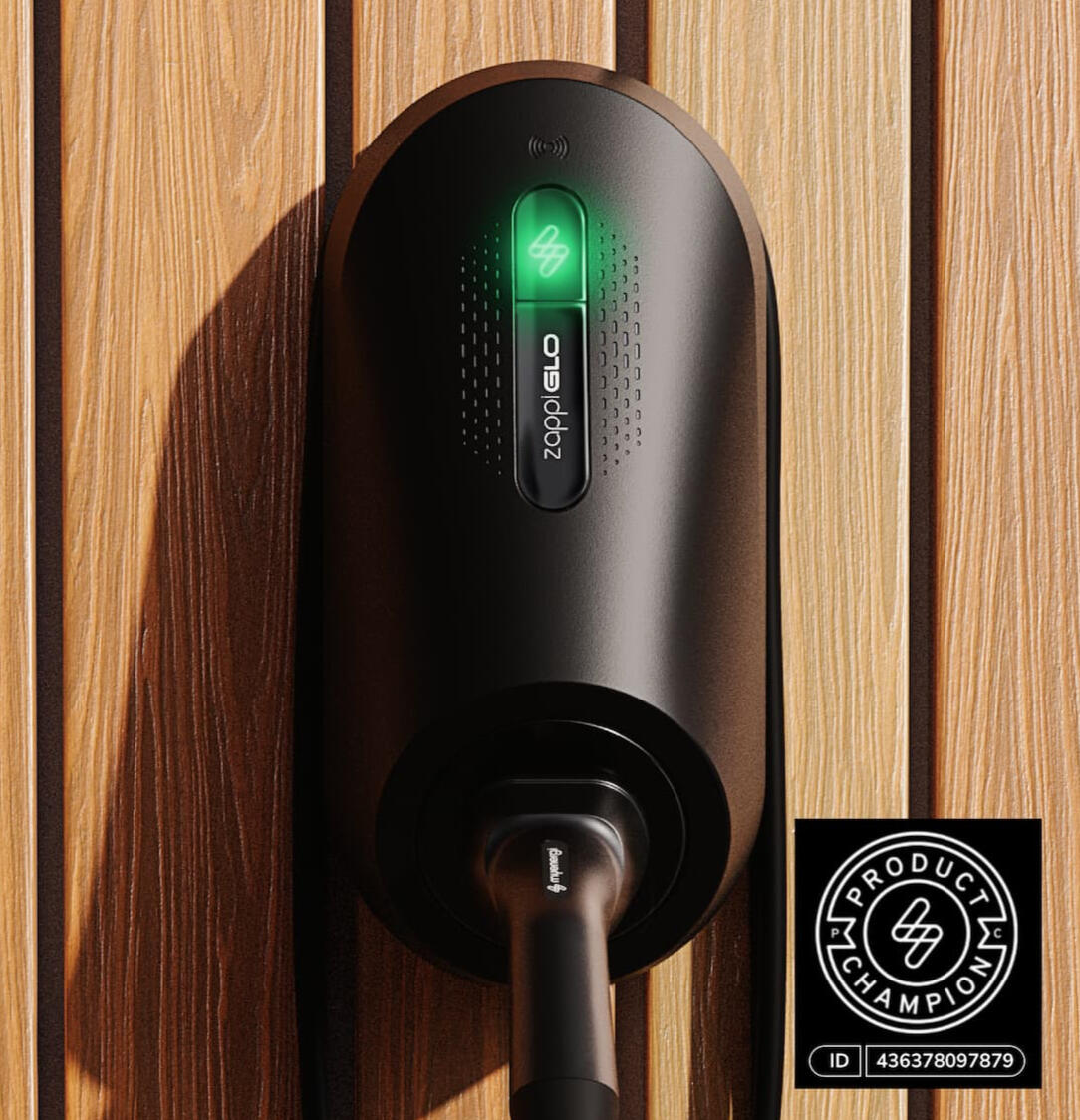
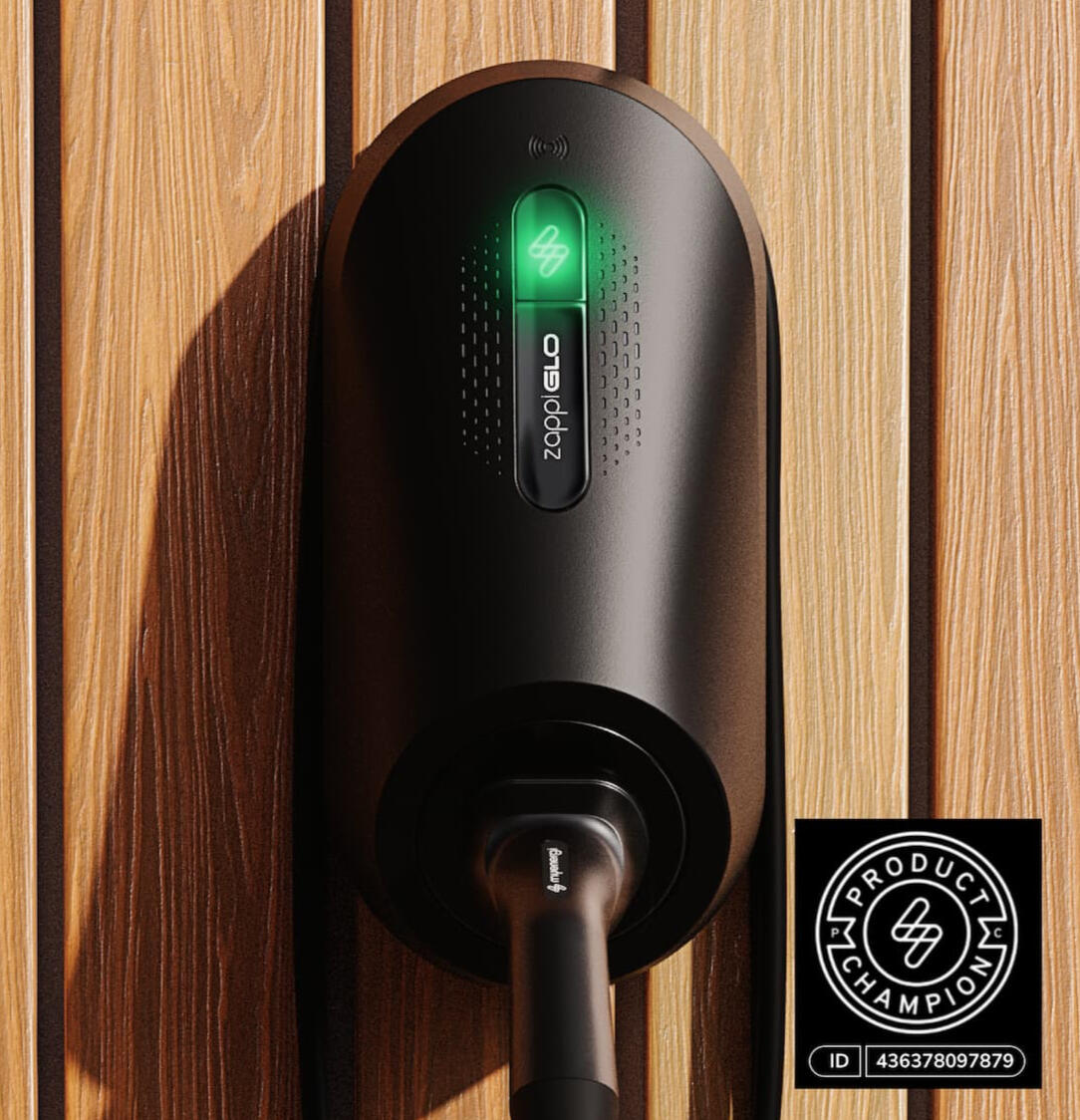
Best for: Homeowners who want to link their EV charging seamlessly with home solar panels, home battery storage, or wider myenergi smart ecosystem.
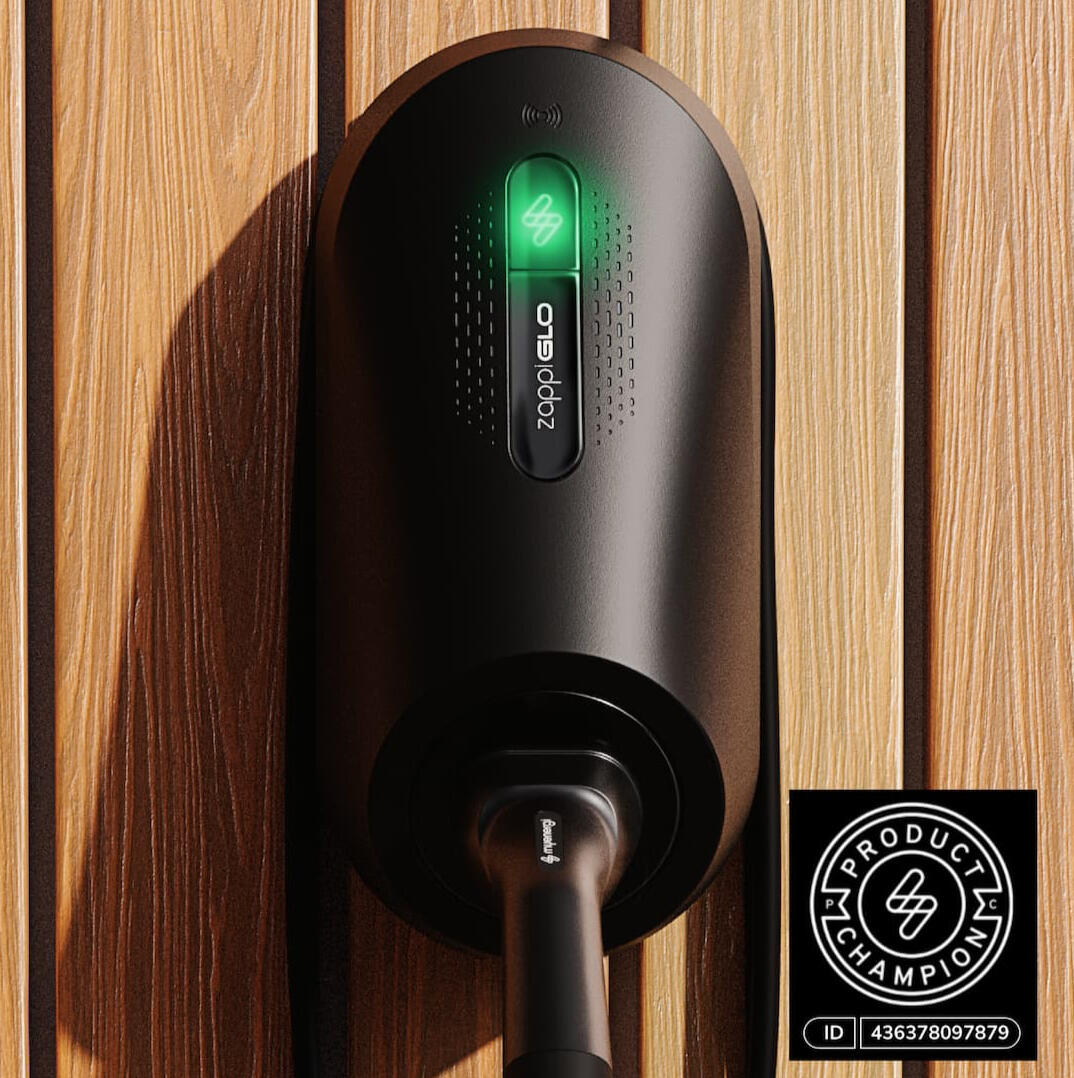
myenergi Zappi GLO Tethered

Zappi GLO Tethered

We're a myenergi Product Champion3-year hardware warranty
✅ Smart 7.4kW home EV charger
6.5m tethered charging cable
Solar and battery compatible
✅ Compatible with Type 2 EVs
✅ Integrated WiFi
✅ Charge using cheaper smart tariffs
✅ Class leading myenergi app ecosystem
✅ Optional RFID access security

Product of the Year Badge

☑️ Works with Intelligent Octopus Go
☑️ Works with Eon Next Drive Smart
☑️ Works with OVO Charge Anytime
☑️ Works with EDF GoElectric Smart Charging
☑️ Works with British Gas Hive Power+
*Last checked: August 2026


From £989 installed*

6.5m Tethered - attached charging cableDirect Installer Price • Cut Out The Middleman


While we recommend our carefully selected range of EV chargers, we’re equally happy to install chargers from leading manufacturers such as Wallbox, Simpson & Partners, Andersen and Sync Energy (from only £849)


*From price based on a standard installation with up to a 5m cable run from your electricity supply to the charger location.

Our Promise

🛡️ Fully insured - We hold comprehensive public liability and professional indemnity insurance.NAPIT-registered - We are NAPIT registered and independently assessed annually to ensure continued compliance.🤝 Warranty included – 3 or 4-year manufacturer's hardware warranty (3 years standard, 4 years for Tesla) plus a 1-year workmanship warranty.Installed to strict standards - Every installation is completed in accordance with BS 7671 Requirements for Electrical Installations and the Code of Practice for Electric Vehicle Charging Equipment Installation.

🔌 DNO applications handled - We manage the required application and notification process with your Distribution Network Operator (DNO) for every charger installation.🏆 Complete certification - Every installation includes an Electrical Installation Certificate (EIC) and an Electric Vehicle Charging Certificate.🏛️ Building Regulations covered - We provide a Building Regulations Compliance Certificate and notify the local authority on your behalf.📱 Personal handover – We’ll set up your charger’s companion app with you, walk you through smart charging schedules, and make sure you’re 100% comfortable using it before we leave.

OZEV Grants

Save up to £500 with an OZEV GrantEligible customers can receive up to £500 towards the cost of a home EV charger, with installations from just £349 installed.*

OZEV Approved Installer Badge

Please note: We do not currently accept installations funded through the Workplace Charging Scheme (WCS).

I’ll provide a formal quotation once your OZEV grant eligibility has been confirmed. The grant must be applied for and approved by OZEV before your installation takes place.Grants available for:Renters
Flat owners
Households with on-street parking

* From £349 installed is based on a Sync Energy untethered standard installation after the maximum available £500 OZEV grant has been applied. Customers must apply for the grant through the OZEV portal and meet the current eligibility criteria. The grant is paid directly to the installer and deducted from your final installation cost. If the OZEV grant is not approved, or the claim is subsequently rejected for reasons outside the Installer’s control, the £500 grant discount will not apply and the full installation price will be payable.

Nationals ❌ vs Ryan Electrical Northants ✅

Personal Service & Quotations
❌ Generic online estimate with zero personal interaction or accuracy.
✅ Direct communication, detailed site visit where required, and an exact quote before work begins.
Cable Choice & External Finish
❌ Cheap plastic cleats and messy, separate CAT5 data wires trailing your walls.
✅ Premium Doncaster EV Ultra cable fixed with sleek, fire-safe D-Line metal clips.
Workmanship & Continuity
❌ The Subcontractor Lottery: A random installer paid a flat rate who rushes to hit daily targets.
✅ Guaranteed Craftsmanship: I personally quote, plan, and install every job to treat your home like my own.
Handover & Tech Setup
❌ "Test and go" — leaves you alone to figure out complex apps and smart tariffs.
✅ Full walkthrough: smart app setup, EV tariffs, and charging schedules completely sorted.
Local Care & Support
❌ Stuck in corporate call-centre phone queues if something goes wrong.
✅ Direct local support — you have my personal line whenever you need help.

Featured EV Questions

Our top 10 questions about EV charger installation. Click below to see the full EV FAQ.

How Much Does EV Charger Installation Cost in Northampton?

The cost of an EV charger installation depends on the charger you choose and the requirements of your property.

Our prices are based on a standard installation, with additional costs only where extra work or materials are required.

We'll provide a clear quotation before any work is carried out, so you know exactly what your installation will cost.

Do I Need a Consumer Unit Upgrade for an EV Charger?

Not always. Many homes already have a suitable electrical installation that can support an EV charger.

We will check your existing consumer unit, protective devices, earthing arrangements and overall installation condition before fitting a charger.

If the existing consumer unit isn't suitable for the EV circuit, a secondary consumer unit is included as part of our standard installation. This allows the EV charger to have the appropriate dedicated protection without necessarily requiring a full replacement of your existing consumer unit.

If a full consumer unit upgrade is required for other reasons, we'll explain exactly what is needed and provide a separate quotation.

Can Any Electrician Install My Home EV Charger?

EV charger installation is specialist electrical work and the installer needs to be competent in the relevant requirements for EV charging installations.

While many electricians are capable of carrying out electrical work, you should choose an installer with the appropriate qualifications, experience and knowledge of EV charging systems.

Ryan Electrical Northants is NAPIT registered and specialises in domestic EV charger installations, with experience installing a range of leading charger brands.

We focus on safe, compliant installations with neat cable routing, correct protection, full testing and proper commissioning.

What’s the Difference Between a Tethered and Untethered EV Charger?

A tethered charger has a charging cable permanently attached to the unit, making it quick and convenient to plug your vehicle in.

An untethered or socketed charger allows you to use your own charging cable, which can be useful if you change vehicles or prefer a cleaner appearance when not charging.

The best option depends on your preferences, parking arrangements and how you use your vehicle.

What EV Charger Is Right for My Car?

There isn't one EV charger that's best for every vehicle.

The right choice depends on your vehicle, its maximum AC charging rate, your electricity supply, parking arrangements, charging habits and whether you have solar panels or other smart-energy equipment.

You should also consider whether you want a tethered or untethered charger and which smart charging features are important to you.

We can recommend an EV charger based on how you actually use your car and your home, rather than simply choosing the most expensive or highest-powered option.

Will My Electricity Supply Support an EV Charger?

Most modern homes can support EV charging, but every property is different.

Before installation, we assess factors including your incoming supply, consumer unit, earthing arrangements and existing electrical demand.

If there are any concerns, we can advise on the best solution, which may include load management equipment or contacting your electricity network operator.

How Long Does an EV Charger Installation Take?

A standard EV charger installation is usually completed within half a day.

More complex installations can take longer, particularly where there are longer cable runs, difficult cable routes, groundworks, consumer unit work or other electrical requirements.

We'll give you an indication of the expected installation time before the work begins.

Every installation is fully tested and commissioned before we leave.

Can I Charge My EV Using Solar Panels?

Yes. Many modern EV chargers can work alongside solar PV systems, allowing you to use surplus solar generation to charge your vehicle.

Chargers such as the myenergi Zappi are designed with solar integration in mind and can be configured to make use of available excess generation.

The best setup depends on your solar installation, inverter, battery storage and energy usage. We can advise on the most suitable charger and configuration for your home.

Are There Any Grants Available for EV Charger Installations?

[LIVE — Last checked: August 2026]

Yes. Government grants are currently available for some EV charger installations, but eligibility depends on your circumstances and the type of property and parking you have.

For example, eligible renters and flat owners with private off-street parking can currently receive up to £500 towards the cost of an EV chargepoint. There is also a grant of up to £500 for eligible households with on-street parking where a suitable cross-pavement charging solution is required.

The current home chargepoint schemes have been extended until 31 March 2027. Grant rules and eligibility can change, so we recommend checking the latest government guidance before applying.

If you're eligible, you'll need to follow the government's application process and use an OZEV-authorised installer where required.

Check the latest EV chargepoint grant guidance on GOV.UK

Can I Install an EV Charger if I Don't Have a Driveway?

Possibly, yes. Not having a driveway doesn't automatically mean you can't have an EV charger.

The main consideration is how your vehicle is parked and how the charging cable can safely reach it without creating an obstruction or trip hazard.

There are solutions available for some properties, including pavement cable gullies and other purpose-designed cable-management systems. Where appropriate, a folding cable arm can also be installed to support the cable between the property and the vehicle.

These solutions aren't suitable for every location, so we'll assess your property and parking arrangements and explain what options are available.


EV Tariffs Explained

Standard EV tariffs offer a cheaper electricity rate during set overnight hours. You simply plug your car in and charge during the supplier’s discounted period.Smart EV tariffs work differently. They can offer lower unit rates at selected times or bill credits for smart charging, helping you reduce the cost of charging your EV. You tell your energy supplier when you need the car to be ready, and the supplier’s smart charging system decides when to charge it within the available window.Depending on the tariff, the supplier can communicate directly with your compatible EV or compatible EV charger. Pick one of our chargers with the tick ✅ and there’s no need to worry about whether your EV is compatible too.- Octopus - Check EV compatibility
- Eon Next - Check EV compatibility
- OVO - Check EV compatibility
- EDF - Check EV compatibility
- British Gas - Can only connect to EV chargers

ChargerOctopusEon NextOVOEDFBritish Gas
myenergi Zappi GLO
NexBlue Point 2🚗
Ohme Home Pro / ePod🚗🚗🚗
Hypervolt Home 3 Pro
Sync Energy EV Charger🚗🚗
Wallbox Pulsar Max🚗🚗🚗
Andersen A2 / A3 / Quartz🚗
Simpson & Partners Home V3🚗🚗

✅ - Compatible with EV charger
🚗 - Compatible car required
❌ - Not compatible with EV charger or car
*Last checked: August 2026

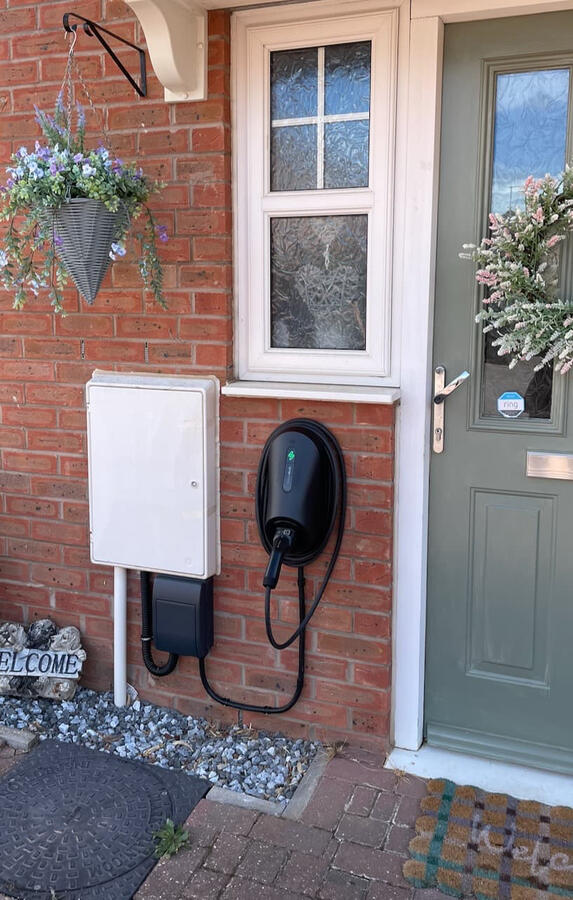
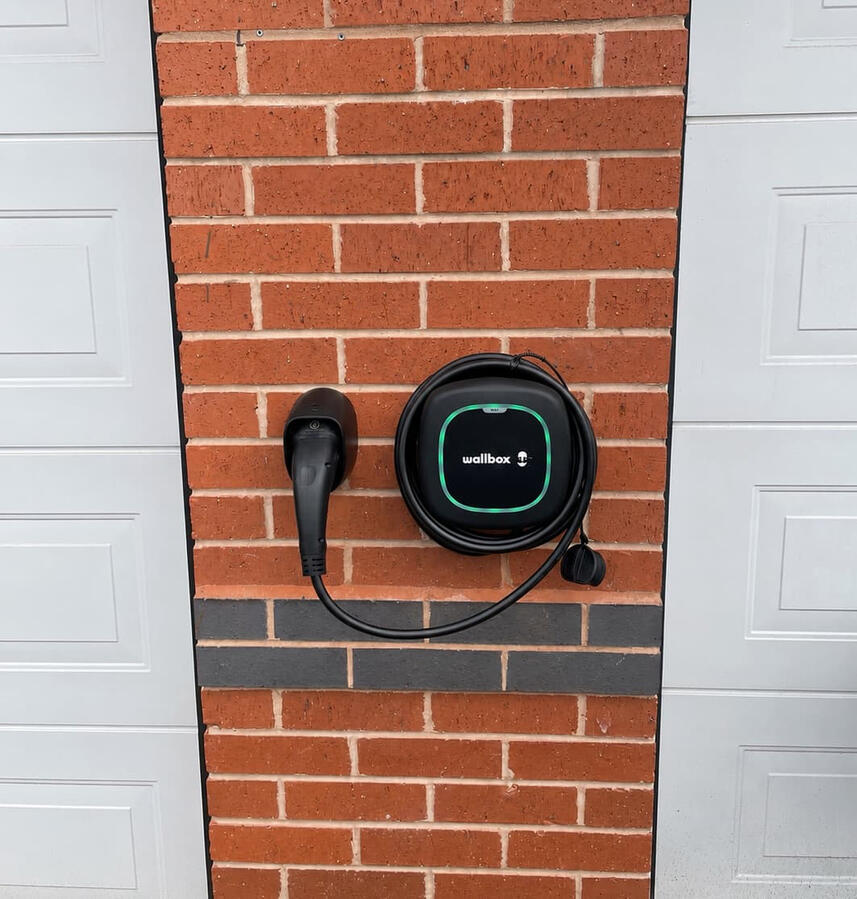
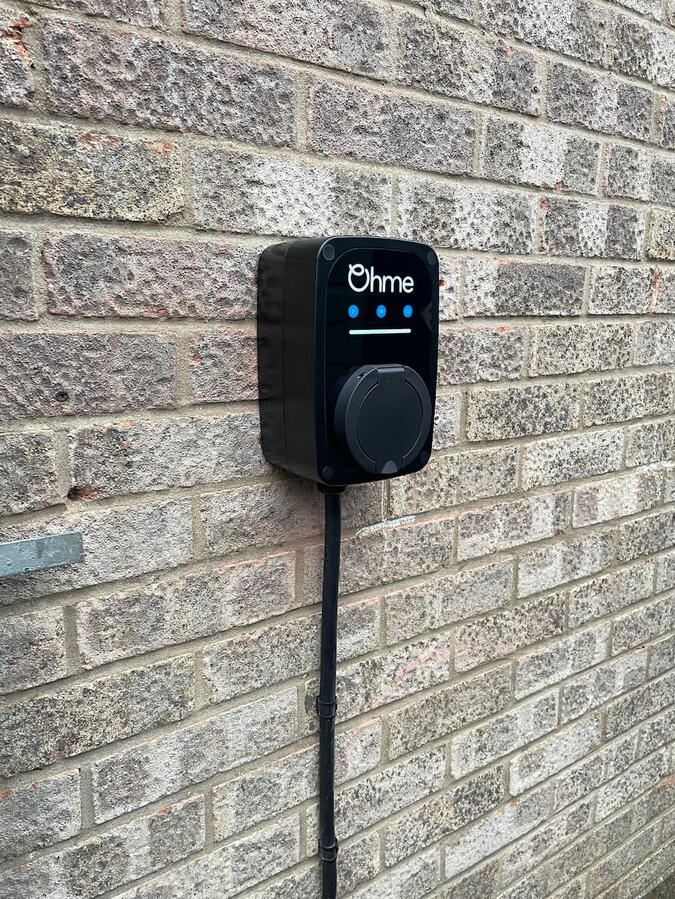
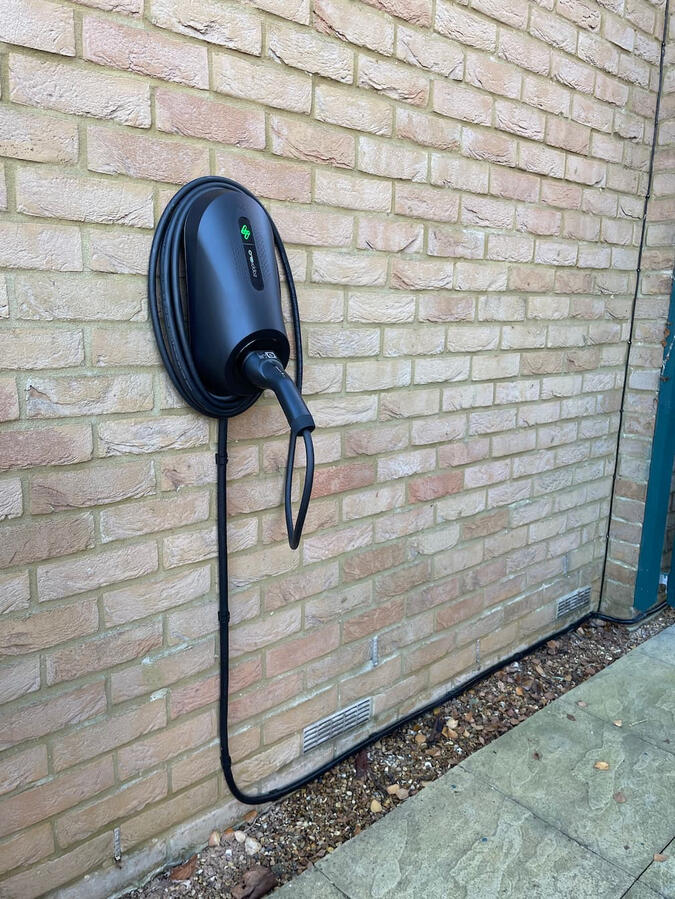
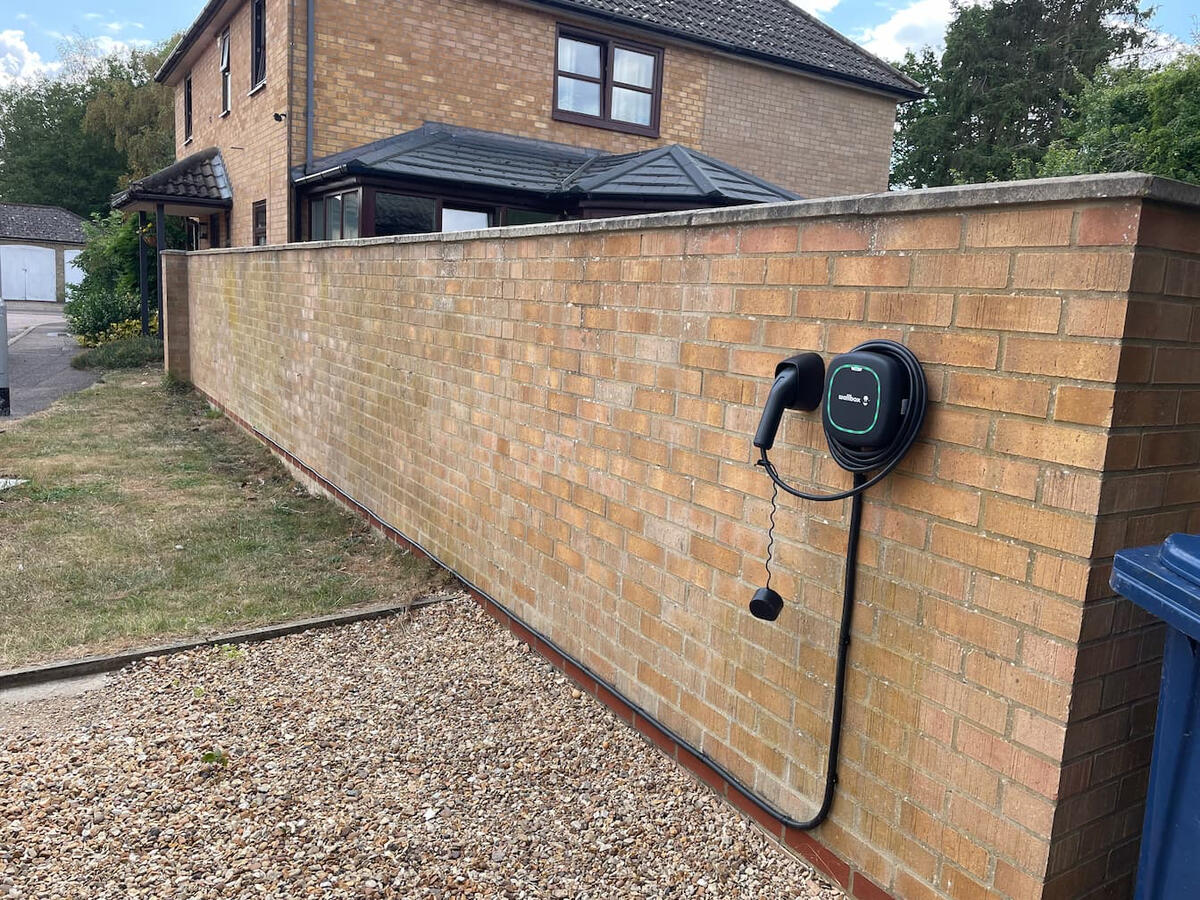
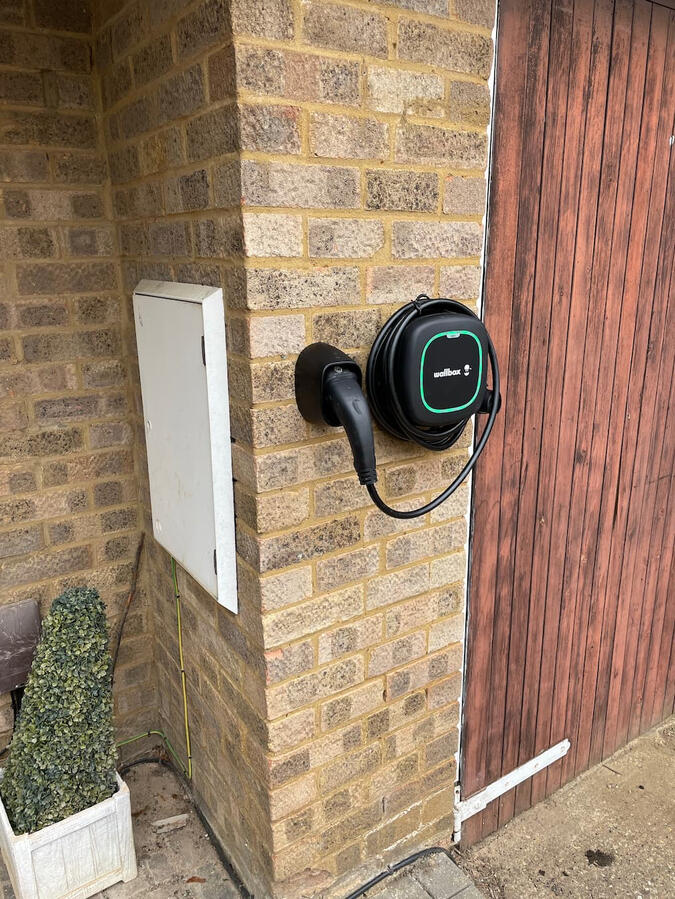
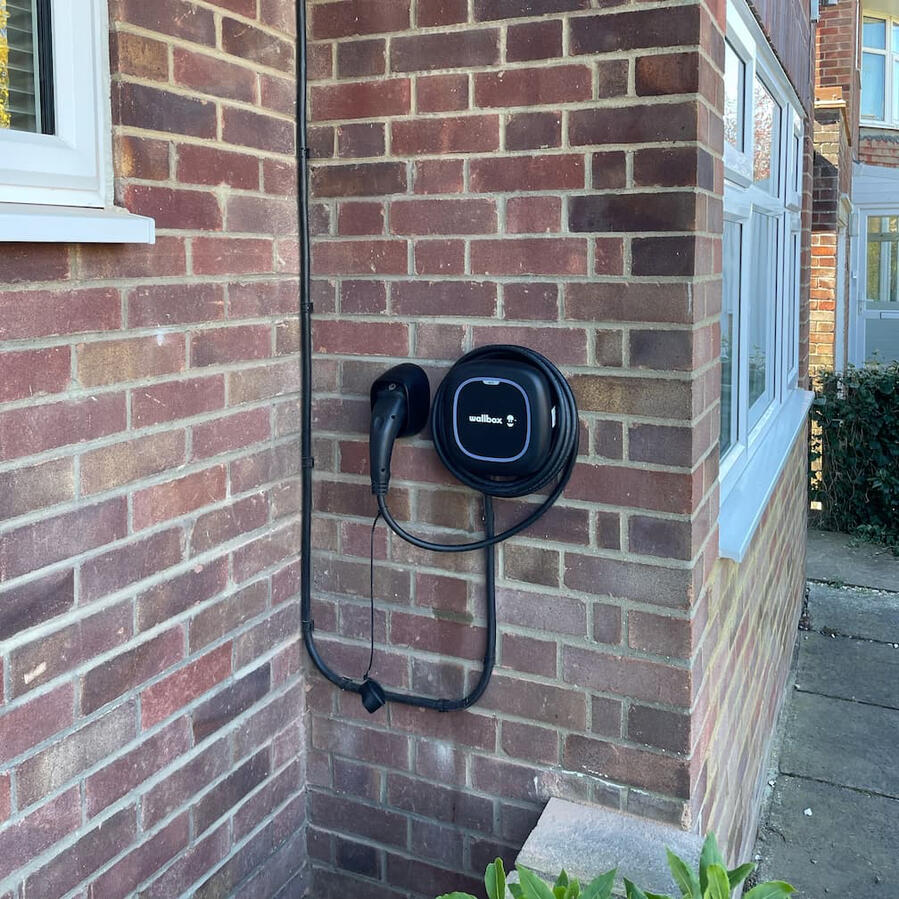
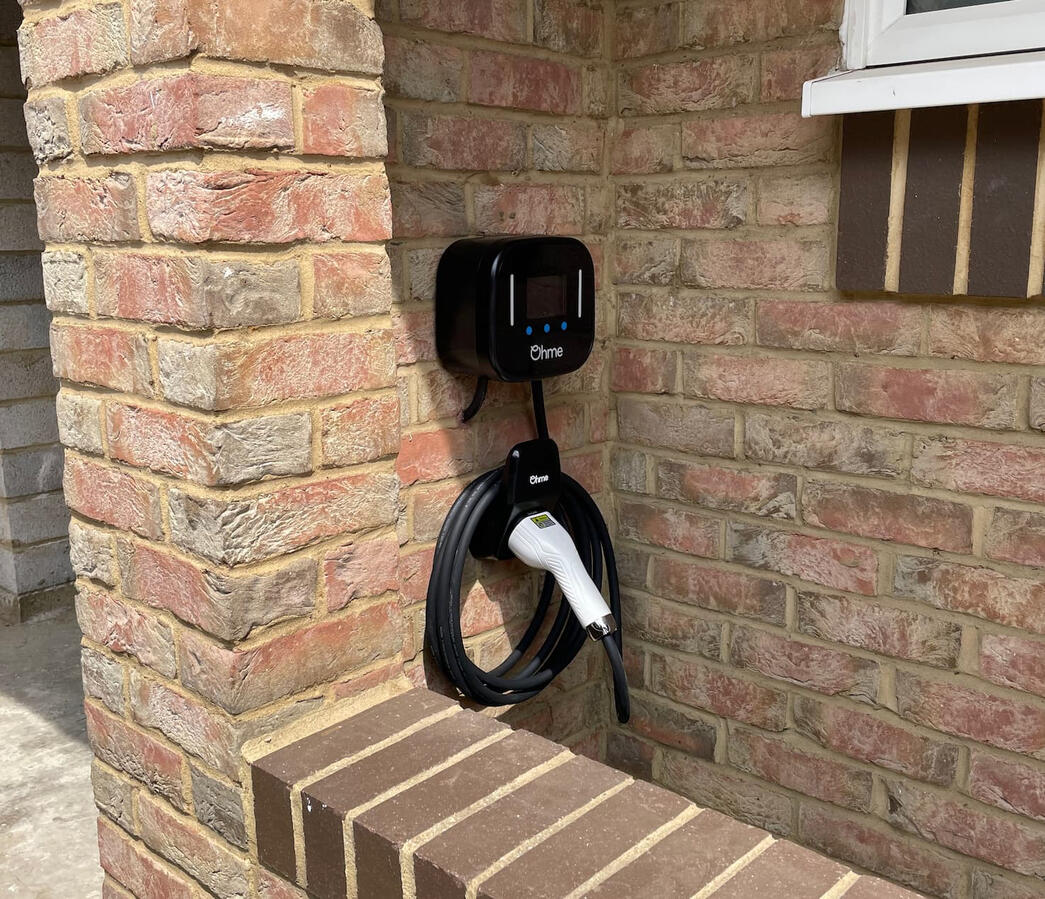
EV Charger Gallery

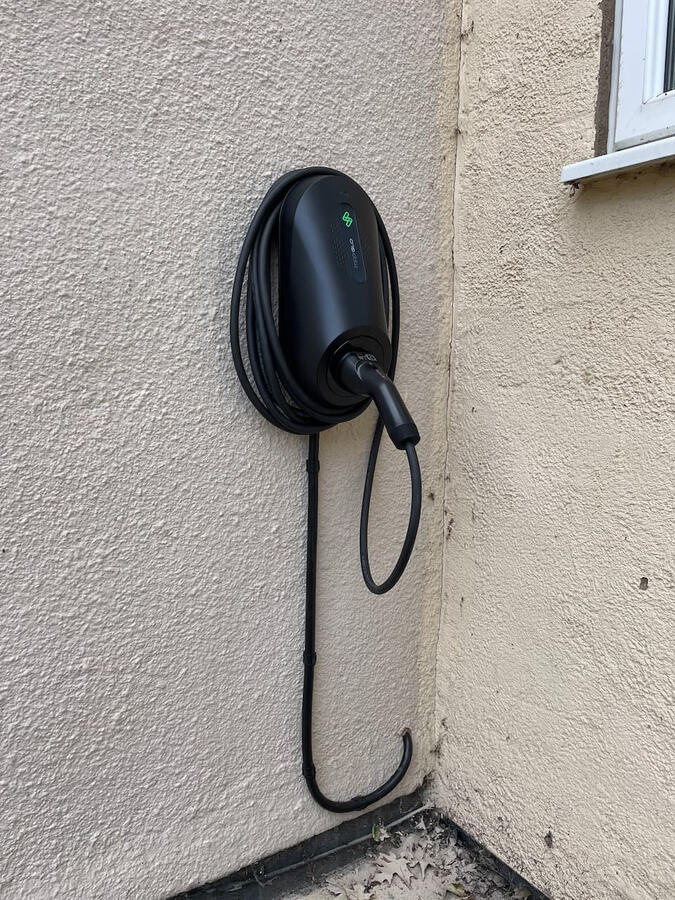
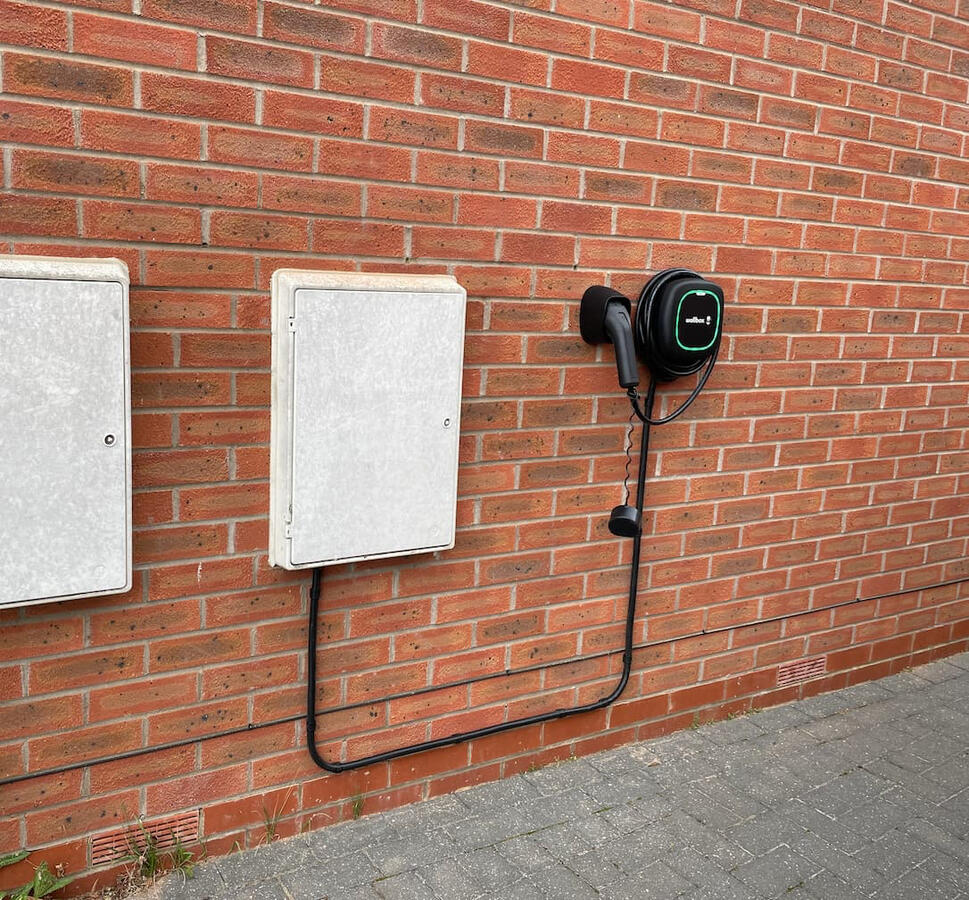
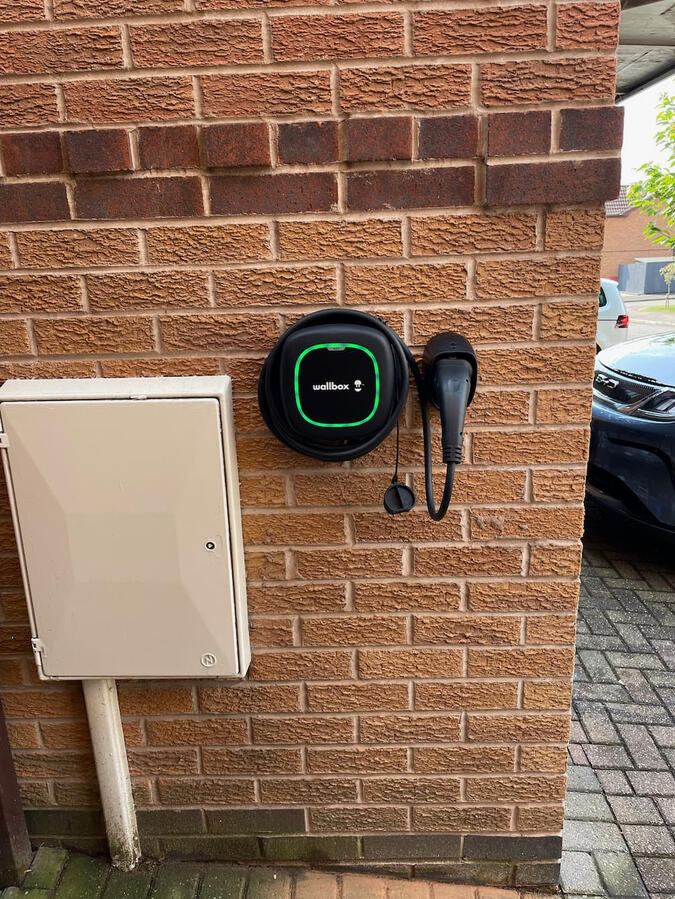
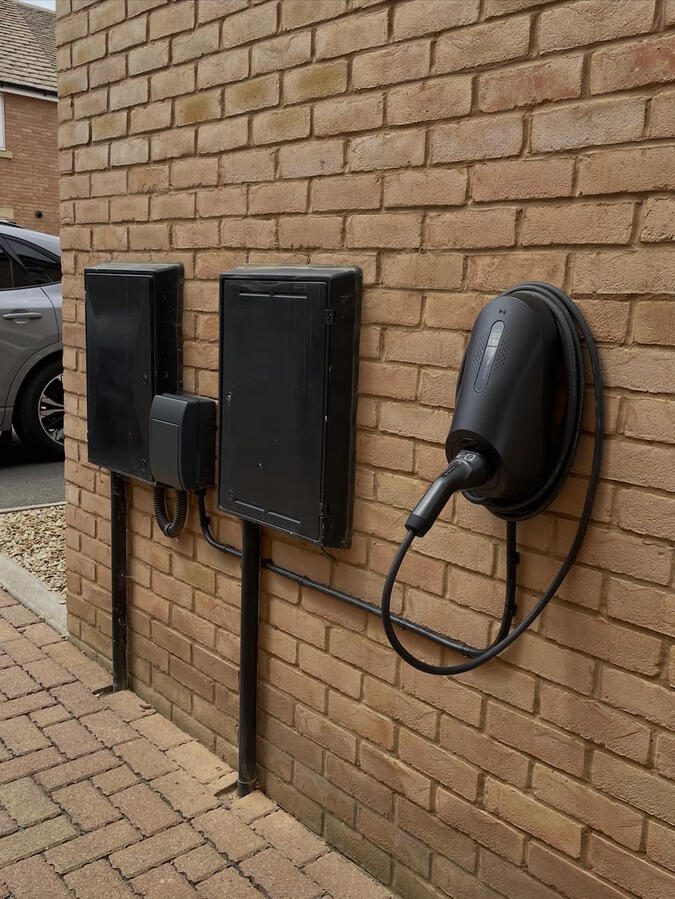
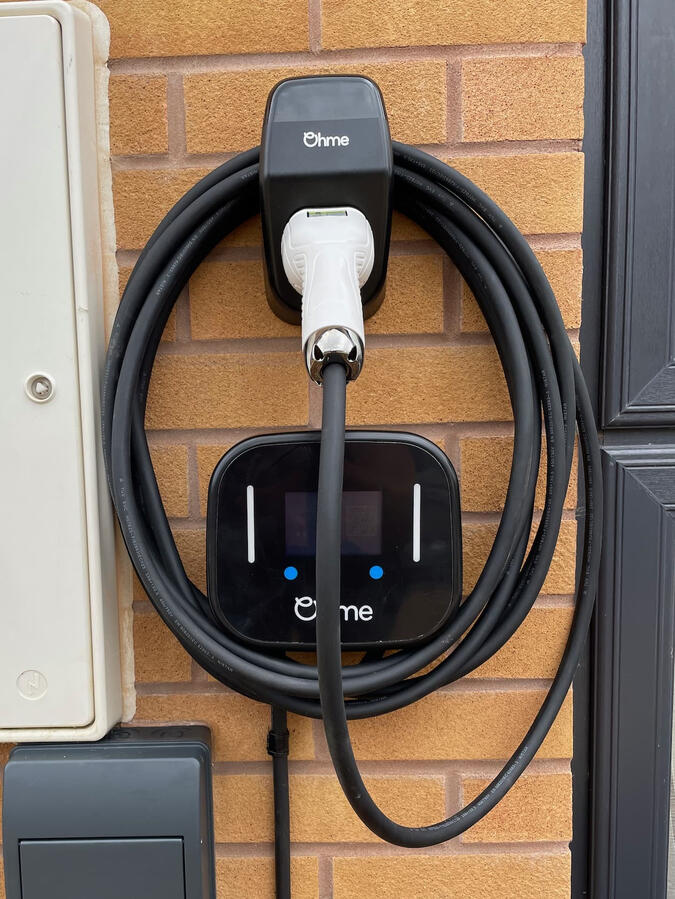
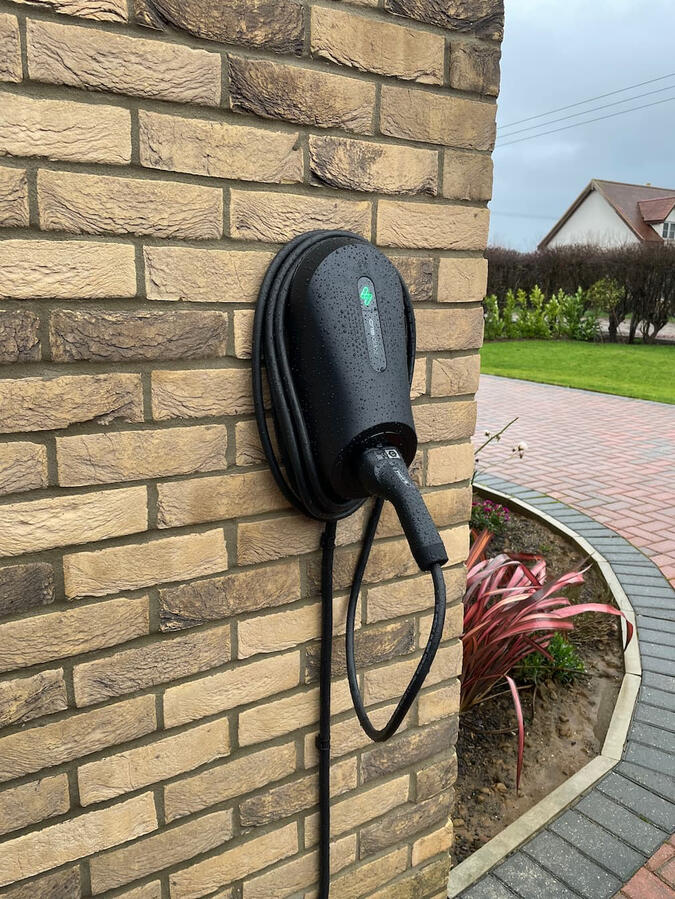
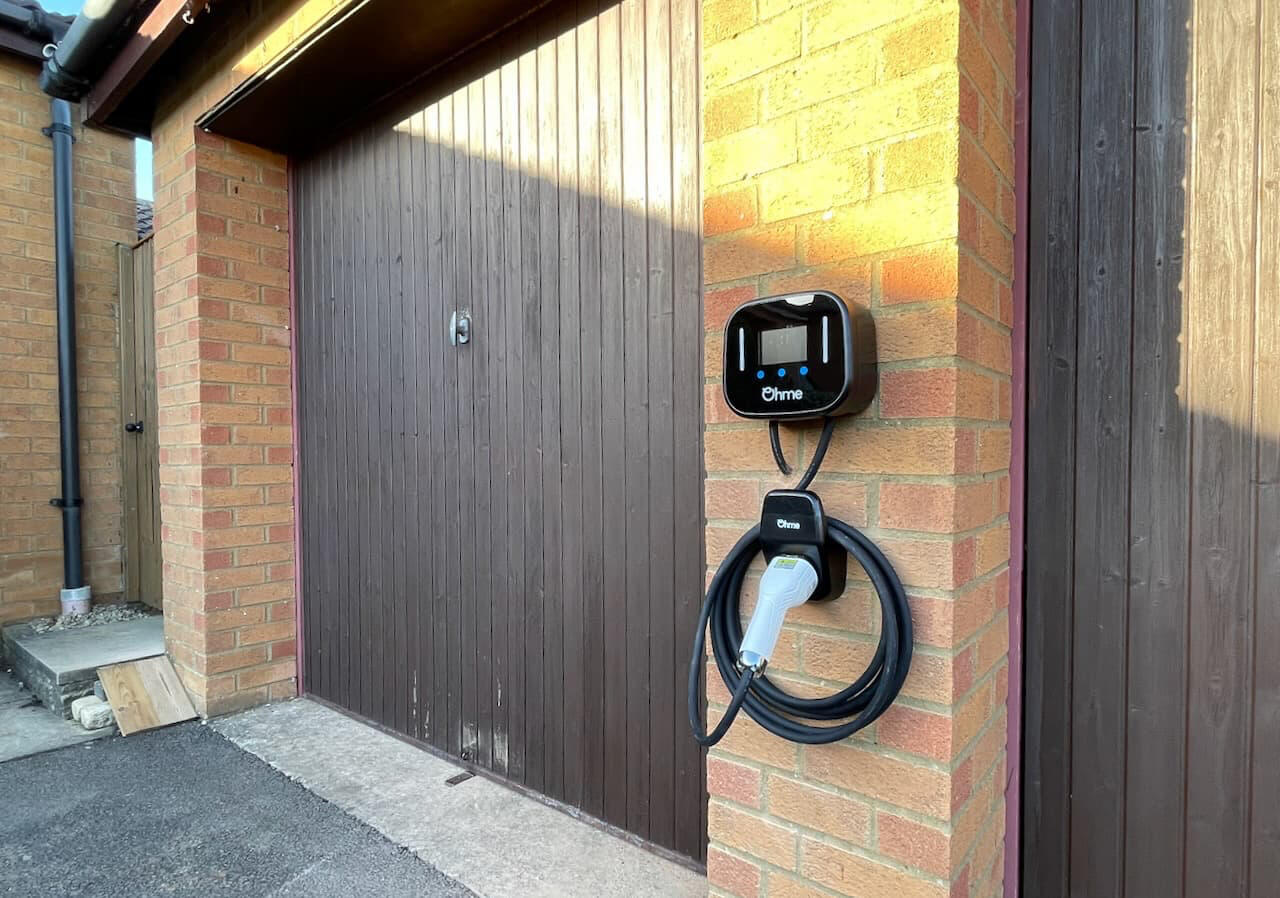
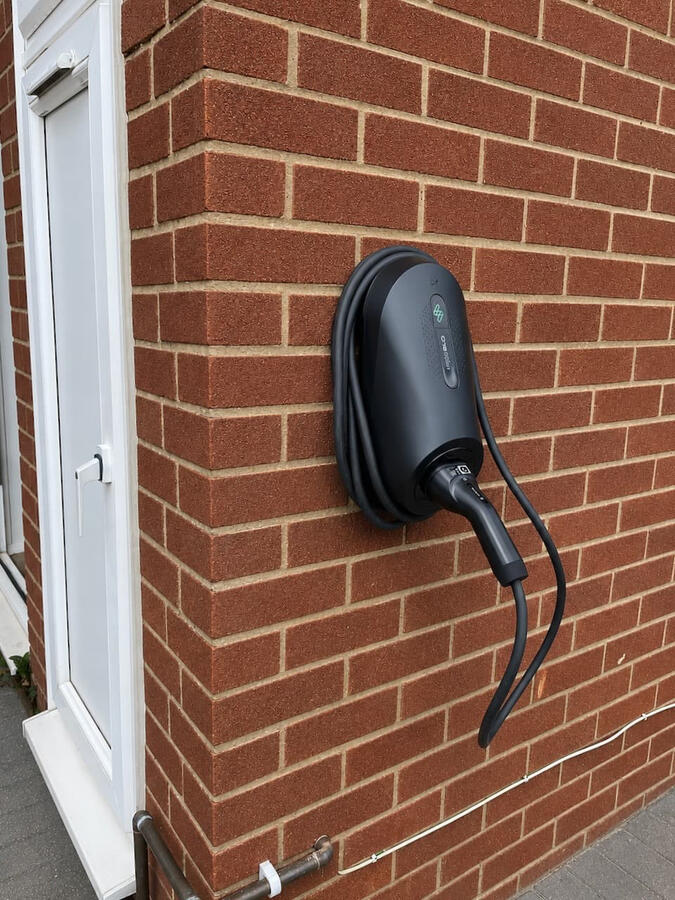
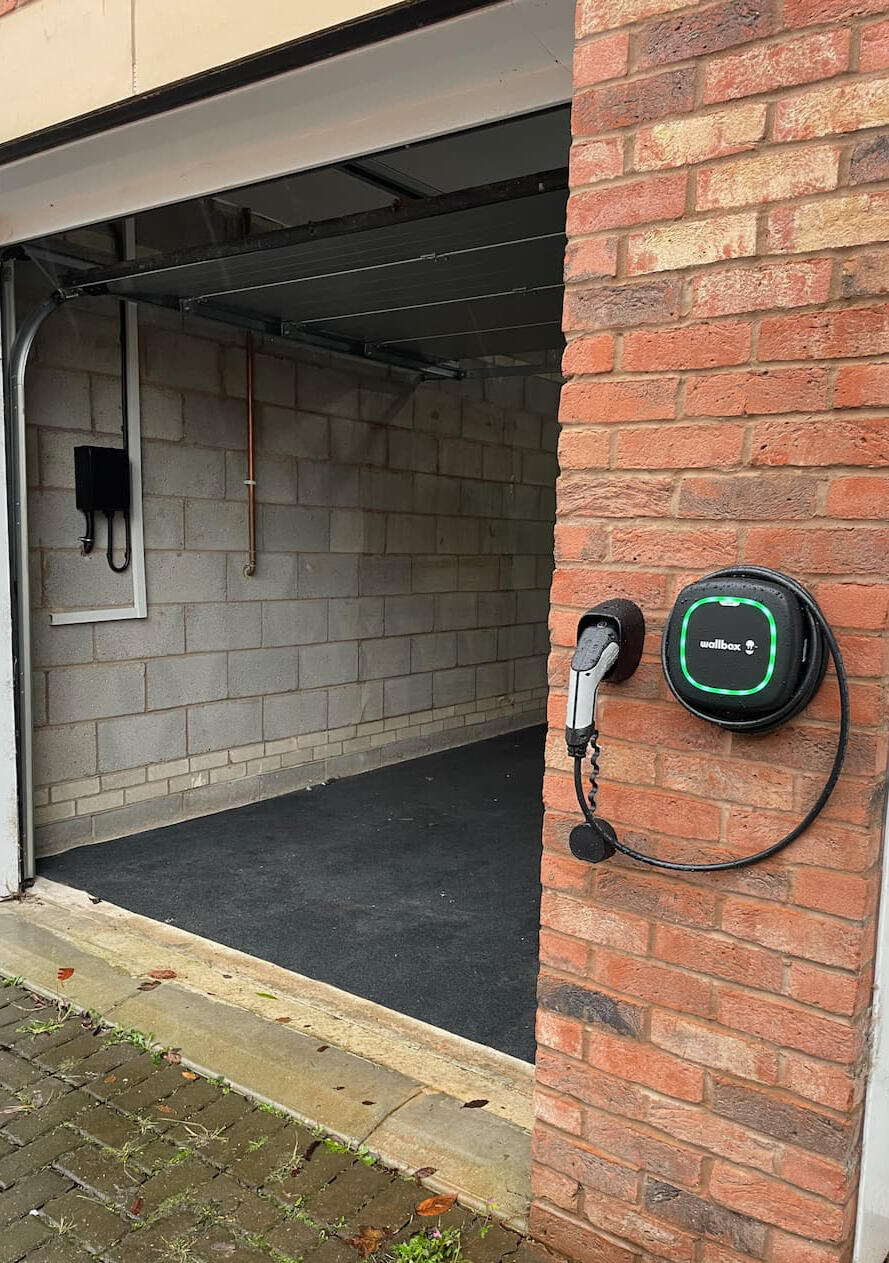
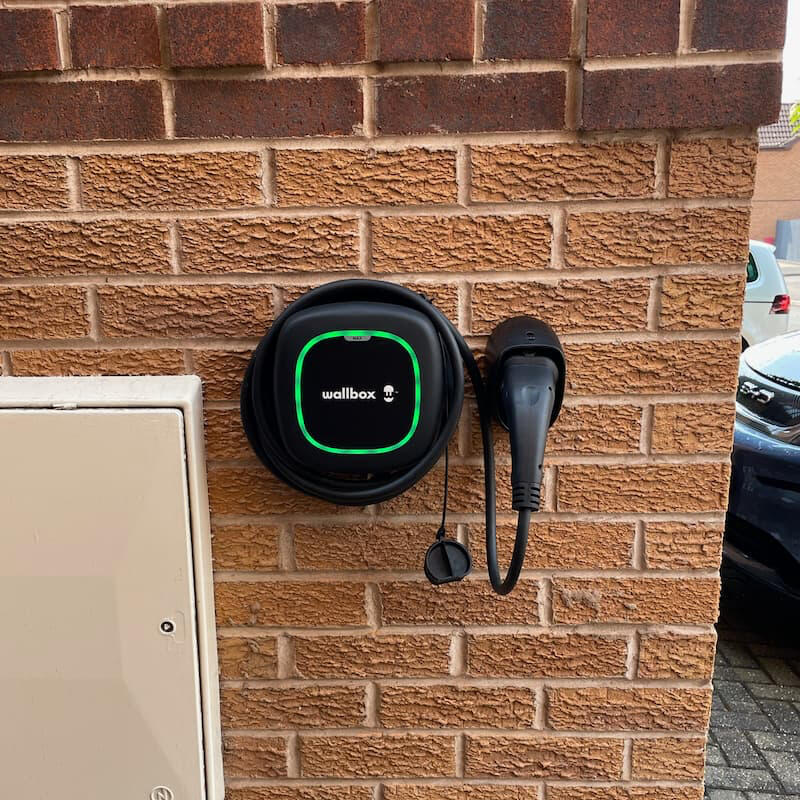
Take a look at some of our recent EV charger installations completed across Northamptonshire. Quality workmanship, tidy finishes, and fully certified installations. See my Instagram page for more.

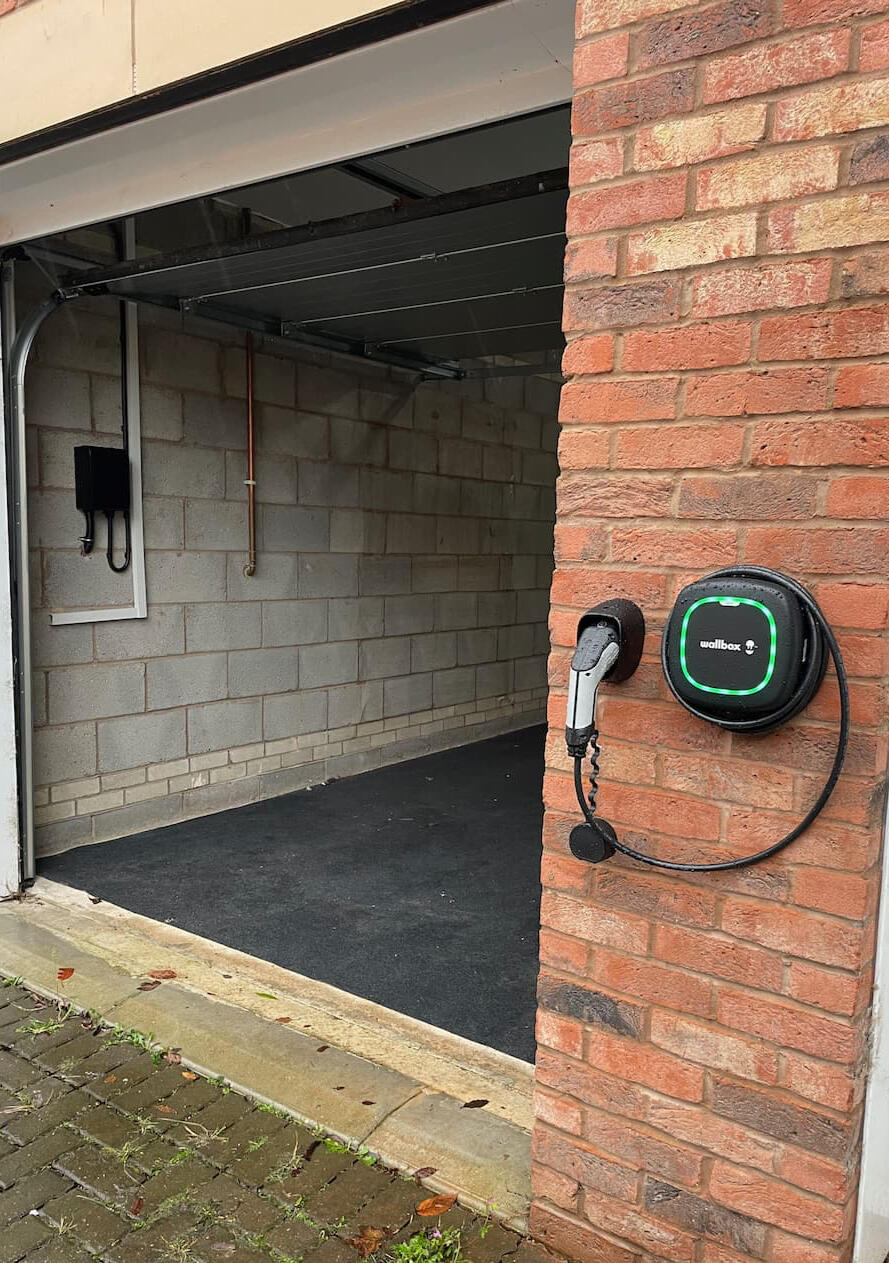
Wallbox Pulsar Max EV Charger Garage

Contact us

To get a guaranteed, fixed-price EV quote, please complete our quick, mobile-friendly form first. It's just 6-questions and 5-photos. Press the blue button below to get started.


NAPIT Logo

Ryan Electrical Northants is a NAPIT and OZEV-approved electrical contractor specialising in domestic electrical services and home EV charger installations. Based in Raunds, we proudly serve homeowners across Northamptonshire, Bedford, Milton Keynes, St Neots and the surrounding areas.We install home EV chargers from trusted manufacturers including myenergi, NexBlue, Ohme, and Hypervolt, as well as providing consumer unit upgrades, fault finding, electrical alterations, sockets, lighting installations, and home electrical improvements.We offer clear, transparent pricing and accept BACS/bank transfer as well as all major credit and debit cards, including Visa, Mastercard and American Express

BACS / VISA / Mastercard / American Express / Apple Pay / Google Pay

Ryan Electrical Northants Logo

EV Charger Specialists & Domestic Electricians in Northamptonshire


Local. Reliable. Certified.


Electrical Services

My Story | Robert Ryan

After years working in the electrical industry, including for a major utility company, I started Ryan Electrical Northants because I wanted to do things differently.Large companies often work to tight schedules, but I’ve always believed in taking the time to do a job properly. For me, it’s about quality workmanship, attention to detail, and taking pride in the finished result.My background gives me extensive experience across a wide range of electrical installations, ensuring every job is completed safely, neatly, and in full compliance with current regulations. As an independent electrician, I provide a more personal service, and you’ll deal directly with me from the initial enquiry through to the final safety certificate.Above all, I treat every customer’s home with the same care and respect as I would my own.Our services include:☑️ EV charger installations
☑️ Electrical installations and alterations
☑️ Consumer unit (fuse board) upgrades
☑️ Fault finding and repairs
☑️ Additional sockets, lighting, and home electrical improvements

Robert Ryan - Owner

Services Gallery

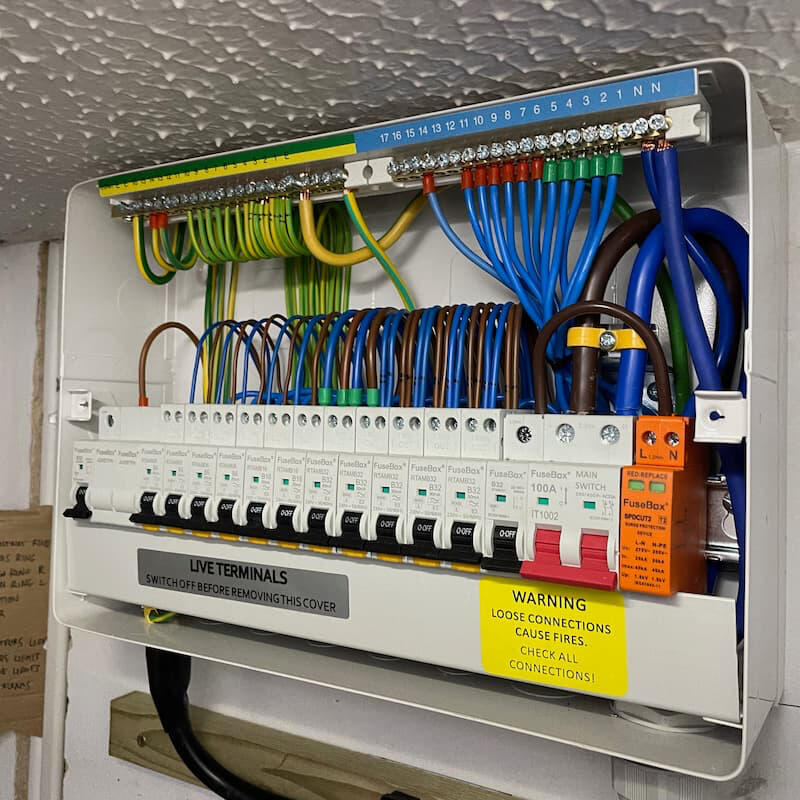
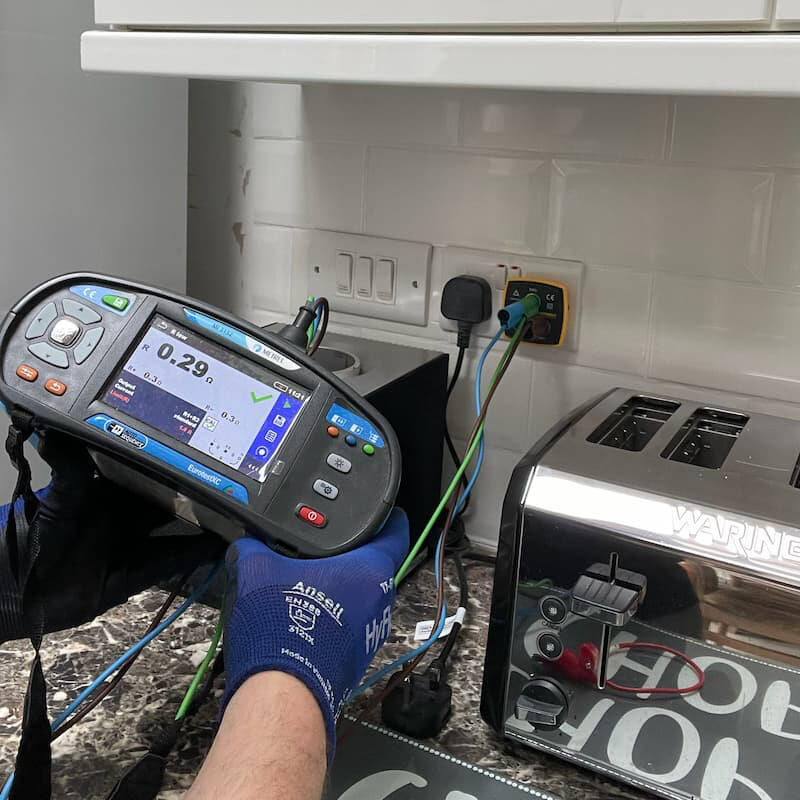
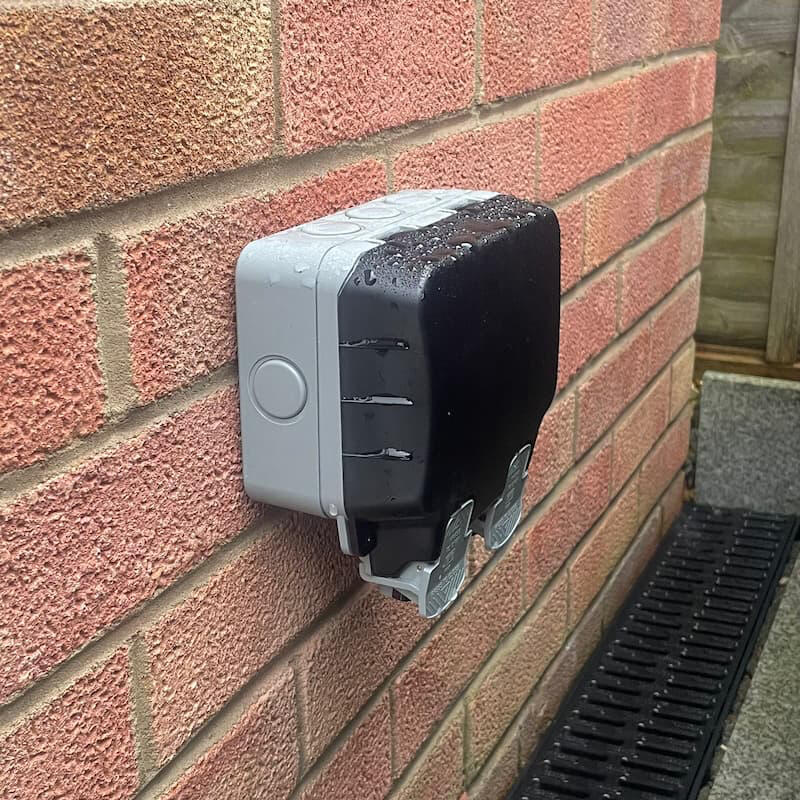
Take a look at some of my recent domestic electrical and EV charger installations completed across Northamptonshire. Quality workmanship, tidy finishes, and fully certified installations. See my Instagram page for more.

NAPIT Logo

Ryan Electrical Northants is a NAPIT and OZEV-approved electrical contractor specialising in domestic electrical services and home EV charger installations. Based in Raunds, we proudly serve homeowners across Northamptonshire, Bedford, Milton Keynes, St Neots and the surrounding areas.We install home EV chargers from trusted manufacturers including myenergi, NexBlue, Ohme, and Hypervolt, as well as providing consumer unit upgrades, fault finding, electrical alterations, sockets, lighting installations, and home electrical improvements.We offer clear, transparent pricing and accept BACS/bank transfer as well as all major credit and debit cards, including Visa, Mastercard and American Express

BACS / VISA / Mastercard / American Express / Apple Pay / Google Pay

Areas Covered

Electrician in Northamptonshire

Ryan Electrical Northants provides domestic electrical services and home EV charger installations across Northamptonshire and selected surrounding areas. Based in Raunds, we regularly work throughout, Northampton, Wellingborough, Kettering, East Northants, St Neots, Bedford and Milton KeynesWhether you need an EV charger installation, consumer unit upgrade, fault finding, additional sockets, lighting installation or general electrical alterations, you’ll receive the same professional service, honest advice and high standard of workmanship wherever you’re located.As a NAPIT-registered electrician, all work is completed to the latest BS 7671 Wiring Regulations and fully tested before completion. We focus on homeowners and pride ourselves on clear communication, tidy workmanship and straightforward pricing.Select your area below to learn more about the services we offer in your location.

NAPIT Logo

Ryan Electrical Northants is a NAPIT and OZEV-approved electrical contractor specialising in domestic electrical services and home EV charger installations. Based in Raunds, we proudly serve homeowners across Northamptonshire, Bedford, Milton Keynes, St Neots and the surrounding areas.We install home EV chargers from trusted manufacturers including myenergi, NexBlue, Ohme, and Hypervolt, as well as providing consumer unit upgrades, fault finding, electrical alterations, sockets, lighting installations, and home electrical improvements.We offer clear, transparent pricing and accept BACS/bank transfer as well as all major credit and debit cards, including Visa, Mastercard and American Express

BACS / VISA / Mastercard / American Express / Apple Pay / Google Pay


Contact Us

To get a guaranteed, fixed-price EV quote, please complete our quick, mobile-friendly form first. It's just 6-questions and 5-photos. Press the blue button below to get started.


NAPIT Logo

Ryan Electrical Northants is a NAPIT and OZEV-approved electrical contractor specialising in domestic electrical services and home EV charger installations. Based in Raunds, we proudly serve homeowners across Northamptonshire, Bedford, Milton Keynes, St Neots and the surrounding areas.We install home EV chargers from trusted manufacturers including myenergi, NexBlue, Ohme, and Hypervolt, as well as providing consumer unit upgrades, fault finding, electrical alterations, sockets, lighting installations, and home electrical improvements.We offer clear, transparent pricing and accept BACS/bank transfer as well as all major credit and debit cards, including Visa, Mastercard and American Express

BACS / VISA / Mastercard / American Express / Apple Pay / Google Pay


Our Full Range of EV Chargers

We install a carefully selected range of smart EV chargers from leading manufacturers, giving you the flexibility to choose the right charger for your vehicle, home and charging needs.From intelligent home charging and solar integration to simple, reliable overnight charging, we can supply and install the charger that’s right for you. All installations are completed by a qualified, NAPIT-registered electrician and tested and certified on completion.Supply & Installation or Installation Only
We can supply and install your chosen charger, or provide an installation-only quotation if you have already purchased one.

myenergi Zappi GLO

* Premium smart charging
* Market-leading tariff integration
* Solar & home energy ecosystem

From £989 installed*


NexBlue Point 2

* Great-value smart charging
* Future-ready V2G capability
* Smart tariff integration

From £929 installed*


Ohme Home Pro

* Smart tariff integration
* Solar charging compatible
* Convenient LCD display

From £1029 installed*


Ohme ePod

* Smart tariff integration
* Solar charging compatible
* Compact untethered design

From £979 installed*


Hypervolt Home 3 Pro

* 5m, 7.5m or 10m cable options
* Best in class reliability
* Excellent smart tariff integration

From £1129 installed*


Zappi GLO Logo

Best for: Homeowners who want to link their EV charging seamlessly with home solar panels, home battery storage, or wider myenergi smart ecosystem.

myenergi Zappi GLO Tethered

Zappi GLO Tethered

We're a myenergi Product Champion3-year hardware warranty
✅ Smart 7.4kW home EV charger
6.5m tethered charging cable
Solar and battery compatible
✅ Compatible with Type 2 EVs
✅ Integrated WiFi
✅ Charge using cheaper smart tariffs
✅ Class leading myenergi app ecosystem
✅ Optional RFID access security

Product of the Year Badge

☑️ Works with Intelligent Octopus Go
☑️ Works with Eon Next Drive Smart
☑️ Works with OVO Charge Anytime
☑️ Works with EDF GoElectric Smart Charging
☑️ Works with British Gas Hive Power+
*Last checked: August 2026


From £989 installed*

6.5m Tethered - attached charging cableDirect Installer Price • Cut Out The Middleman


NexBlue Logo

Best for: Tech-focused EV owners wanting a future-ready smart charger with dynamic load balancing, 4G connectivity and Plug & Charge/V2G capability.

NexBlue Point 2

NexBlue Point 2

5-year manufacturer warranty
✅ Smart 7.4kW home EV charger
Untethered - use your own charging cable
✅ Compatible with Type 1 and Type 2 EVs
✅ Striking, modern design
✅ Integrated WiFi, 4G and ethernet
✅ Charge using cheaper smart tariffs
Solar charging compatible
✅ Future ready, integrated V2G capability
NexBlue app for smart charging and scheduling


☑️ Works with Intelligent Octopus Go
☑️ Works with OVO Charge Anytime
☑️ Works with EDF GoElectric Smart Charging
🚗 Compatible car required for Eon Next Drive Smart
❌ Doesn't work with British Gas Hive Power+
*Last checked: August 2026


From £929 installed*

Untethered (Socketed) - use your own cable


Ohme Logo

Best for: EV owners who want a tethered charger with a built-in screen, powerful smart charging features and excellent integration with smart energy tariffs.

Ohme Home Pro

Ohme Home Pro

3-year manufacturer warranty
✅ Smart 7.4kW home EV charger
5m tethered charging cable
✅ Compatible with Type 2 EVs
✅ Built-in colour LCD screen
4G connectivity
✅ Charge using cheaper smart tariffs
Solar charging compatible
Ohme app for smart charging and scheduling


☑️ Works with Intelligent Octopus Go
🚗 Compatible car required for Eon Next Drive Smart, OVO Charge Anytime and EDF GoElectric Smart Charging
❌ Doesn't work with British Gas Hive Power+
*Last checked: August 2026


From £1029 installed*

5m Tethered - attached charging cable (8m additional cost option)


Ohme Logo

Best for: EV owners who prefer a compact, discreet untethered charger and want the flexibility to use their own charging cable.

Ohme ePod

Ohme ePod

3-year manufacturer warranty
✅ Smart 7.4kW home EV charger
Untethered - use your own charging cable
✅ Compatible with Type 1 and Type 2 EVs
Compact, minimalist design
4G connectivity
✅ Charge using cheaper smart tariffs
Solar charging compatible
Ohme app for smart charging and scheduling


☑️ Works with Intelligent Octopus Go
🚗 Compatible car required for Eon Next Drive Smart, OVO Charge Anytime and EDF GoElectric Smart Charging
❌ Doesn't work with British Gas Hive Power+
*Last checked: August 2026


From £979 installed*

Untethered (Socketed) - use your own cable


Hypervolt Logo

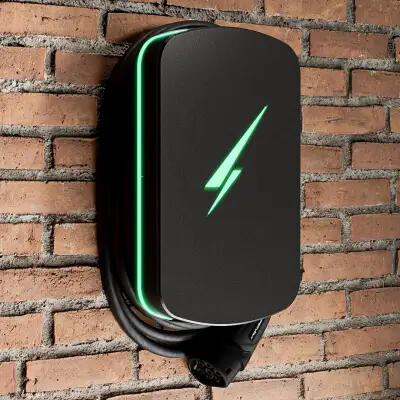
Best for: EV owners looking for a reliable, highly rated smart charger with flexible cable options and excellent smart tariff integration.
Hypervolt Home 3 Pro

Hypervolt Home 3 Pro

3-year manufacturer warranty
7.4kW smart home EV charger
5m, 7.5m or 10m cable options
✅ Compatible with Type 2 EVs
✅ Integrated Wi-Fi and Ethernet connectivity
✅ Charge using cheaper smart tariffs
Solar and battery compatible
Hypervolt app for smart charging and scheduling


☑️ Works with Intelligent Octopus Go
☑️ Works with Eon Next Drive Smart
☑️ Works with OVO Charge Anytime
☑️ Works with EDF GoElectric Smart Charging
❌ Doesn't work with British Gas Hive Power+
*Last checked: August 2026


From £1129 installed*

5m Tethered - attached charging cable (7.5m & 10m additional cost option)


While we recommend our carefully selected range of EV chargers, we’re equally happy to install chargers from leading manufacturers such as Wallbox, Simpson & Partners, Andersen and Sync Energy (from only £849)


*From price based on a standard installation with up to a 5m cable run from your electricity supply to the charger location.

BACS / VISA / Mastercard / American Express / Apple Pay / Google Pay

EV FAQ

Everything you need to know about EV charger installation, from choosing the right charger to preparing your home and looking after it once installed.

Cost & Budgeting

What Payment Methods Do You Accept?

We accept bank transfer as well as all major credit and debit cards, including Visa, Mastercard and American Express.

You can choose whichever payment method is most convenient for you, whether that's making a bank transfer or paying by card.

Card payments are securely processed by Stripe, either through a secure payment link or using Tap to Pay when we're on site.

Are There Any Grants Available for EV Charger Installations?

[LIVE — Last checked: August 2026]

Yes. Government grants are currently available for some EV charger installations, but eligibility depends on your circumstances and the type of property and parking you have.

For example, eligible renters and flat owners with private off-street parking can currently receive up to £500 towards the cost of an EV chargepoint. There is also a grant of up to £500 for eligible households with on-street parking where a suitable cross-pavement charging solution is required.

The current home chargepoint schemes have been extended until 31 March 2027. Grant rules and eligibility can change, so we recommend checking the latest government guidance before applying.

If you're eligible, you'll need to follow the government's application process and use an OZEV-authorised installer where required.

Check the latest EV chargepoint grant guidance on GOV.UK

How Much Does EV Charger Installation Cost in Northampton?

The cost of an EV charger installation depends on the charger you choose and the work required at your property.

A straightforward installation with the charger close to your electricity supply will generally cost less than one involving a longer cable run, difficult cable routing or additional electrical work.

At Ryan Electrical Northants, our prices are based on the installation requirements rather than using a one-size-fits-all price. You'll receive a clear quotation before any work is carried out, so you know exactly what's included.

See our EV charger installation prices for our current standard installation options.

Is It Worth Installing a Fast Charger at Home?

For most EV owners, yes — a dedicated home charger is one of the most useful upgrades you can make.

A typical 7kW home charger can add considerably more range overnight than a standard 3-pin socket. For many drivers, that means plugging in when you get home and having the car ready to go the next morning.

You don't necessarily need the fastest charger available, though. The right choice depends on your vehicle, how many miles you drive and how long your car is normally parked at home.

We'll help you choose a charger that's appropriate for your car and your actual charging requirements, rather than simply recommending the highest-powered option.

How Do I Budget for EV Charger Installation?

The easiest way to budget is to consider the charger and installation together.

The main factors affecting the overall cost include:

  • The charger you choose
  • The distance from your electricity supply to the charger
  • How the cable needs to be routed
  • The existing consumer unit and electrical installation
  • Any additional protection or equipment required
  • Whether your electricity supply needs upgrading

A straightforward installation can be considerably cheaper than a more complicated one, which is why advertised "from" prices don't always represent the final cost for your property.

We'll provide a clear quotation based on your individual installation requirements before you decide to proceed.

What's the Cost Difference Between AC and DC Home Chargers?

Most home EV chargers are AC chargers. They're designed for everyday domestic charging and are generally the most practical and cost-effective option for a home.

DC chargers are much faster, but the equipment is significantly more expensive and normally requires a much larger electrical supply. For most homeowners, a DC charger isn't necessary.

A 7kW AC home charger is usually more than sufficient for overnight charging. Your vehicle's onboard charger will also determine how quickly it can accept AC power.

If you're unsure which type of charger is appropriate, we can recommend a suitable option based on your vehicle, mileage and charging requirements.

Do You Offer Finance or Payment Plans?

We don't currently offer finance or payment plans for EV charger installations.

Our quotations are provided on a straightforward supply-and-installation basis, with the full cost explained before you decide to proceed.

When comparing installation prices, make sure you're comparing like-for-like. Check whether the price includes the charger, installation, electrical protection, cable routing and any other work required.

Choosing an Installer

Why Choose a Specialist EV Installer Instead of a General Electrician?

An EV charger is more than simply connecting a new circuit to a wall. The installation needs to take account of the vehicle, charging equipment, electrical supply, protective devices, earthing arrangements, cable routing and the manufacturer's installation requirements.

A specialist EV installer should be familiar with the requirements for EV charging installations and the different charging systems available.

At Ryan Electrical Northants, EV charging is a core part of what we do. We're NAPIT registered and qualified in domestic electrical work and EV charging, with experience installing a wide range of home charging systems.

We focus on getting the important details right — from the initial assessment and cable routing through to testing, commissioning and showing you how to use your charger.

What Happens to My Warranty if You Are No Longer Trading?

Your installer's workmanship warranty and the manufacturer's product warranty are separate things.

The manufacturer's warranty is provided by the charger manufacturer and covers the charger itself according to its terms and conditions. It isn't dependent on your installer continuing to trade.

Your installation may also have a separate workmanship warranty provided by the installer.

This is one reason we recommend choosing established charger manufacturers with clear warranty and after-sales arrangements. If an issue develops with the charger itself, the manufacturer's warranty process can normally be followed independently of the installer.

Can Any Electrician Install My Home EV Charger?

Not necessarily.

EV charger installation is electrical work, but it also involves specific requirements for EV charging equipment. You should choose an electrician who is competent and appropriately qualified to carry out the work.

If the installation is being carried out under a government grant scheme, there may also be specific installer requirements that must be met.

Before choosing an installer, ask about their electrical qualifications, EV charging experience, registration and whether they can provide the appropriate certification and notifications for the installation.

What's the Difference Between a Registered and Unregistered EV Installer?

There isn't a single universal "EV charger certificate" that makes someone competent to install every charger.

Instead, look at the installer's overall electrical competence, relevant EV charging qualifications or training, registration and experience.

A reputable installer should be able to explain what qualifications and registrations they hold and provide the appropriate electrical installation documentation when the work is complete.

At Ryan Electrical Northants, we're NAPIT registered and qualified to carry out domestic electrical and EV charging work. Every installation is tested and certified on completion.

How Do I Find a Trustworthy EV Charger Installer Near Me?

Don't choose an installer based solely on the cheapest advertised price.

Before booking, check:

  • Are they a registered electrical contractor?
  • Do they have relevant EV charging experience?
  • Can they provide evidence of their qualifications?
  • Are they insured?
  • Will they provide an electrical installation certificate?
  • Will the required building control notification be completed?
  • Do they provide a clear written quotation?
  • Do they have genuine customer reviews?
  • Which charger manufacturers do they work with?

It's also worth checking that the installer is familiar with the particular charger you want installed.

A good installer should be happy to answer these questions before you commit to the work.

What Questions Should I Ask My EV Charger Installer?

A few simple questions can tell you a lot about an installer.

What qualifications and registrations do you hold?
This helps establish that you're dealing with a suitably competent electrical contractor.

What's included in your price?
Make sure you understand whether the quotation includes the charger, cable, protection, installation, testing and certification.

Will you inspect my existing electrical installation first?
A proper assessment should be carried out before installation.

What happens if my installation needs additional work?
A good installer should explain any necessary upgrades rather than simply adding unexpected costs later.

Which charger would you recommend and why?
The answer should be based on your car, home and charging requirements rather than simply the installer's preferred product.

What certification will I receive?
You should receive the appropriate documentation for the electrical installation.

How Do I Check if My Electrician Is Qualified for EV Charger Work?

Ask the electrician directly for their registration details, qualifications and relevant EV charging experience.

If they're registered with a competent person scheme such as NAPIT, you can check their registration through the scheme's own records.

You should also ask whether they can provide the appropriate electrical installation certificate and complete any required building control notification following the installation.

At Ryan Electrical Northants, we are NAPIT registered and qualified for domestic electrical and EV charging work, and every installation is tested and documented on completion.

Choosing Your Charger

What's the Difference Between a Tethered and Untethered EV Charger?

A tethered charger has a charging cable permanently attached to the unit. You simply plug the cable into your car when you want to charge, making it convenient for everyday use.

An untethered (socketed) charger doesn't have a permanently attached cable. You connect your own charging cable when you need to charge and can store it away when you're finished.

Tethered chargers are generally the most convenient option, while untethered chargers can give a cleaner appearance and greater flexibility if you change vehicles or use different charging cables.

Can You Install an EV Charger That I Have Already Purchased?

Yes. We're happy to install a charger you've already purchased, provided it's a suitable product and meets the relevant safety and installation requirements.

We'll need the make and model before installation so we can confirm that it's appropriate for your property and electrical installation.

If you're still deciding which charger to buy, we're also happy to recommend suitable options based on your vehicle, home and how you intend to use the charger.

3.6kW vs 7kW vs 11kW vs 22kW — What's the Difference?

The figures refer to the maximum charging power of the charger.

  • 3.6kW — slower charging, but can be suitable where electrical capacity is limited.
  • 7kW — the most common choice for UK homes and generally ideal for overnight charging.
  • 22kW — very fast AC charging, but requires a suitable three-phase supply and a vehicle capable of accepting 22kW AC charging.

Although 22kW chargers are available, most EVs are limited to around 11kW AC charging, meaning they won't charge any faster than 11kW even when connected to a 22kW charger.

The actual charging speed therefore depends on both the charger and your vehicle's onboard AC charger.

For most UK homes and EVs, 7kW is the most practical option, while 22kW can be worthwhile where a suitable three-phase supply and compatible vehicle are available.

What EV Charger Is Right for My Car?

There isn't one EV charger that's best for every vehicle.

The right choice depends on your vehicle, its maximum AC charging rate, your electricity supply, parking arrangements, charging habits and whether you have solar panels or other smart-energy equipment.

You should also consider whether you want a tethered or untethered charger and which smart charging features are important to you.

We can recommend an EV charger based on how you actually use your car and your home, rather than simply choosing the most expensive or highest-powered option.

What Safety Features Should My EV Charger Have?

A properly installed EV charger should incorporate the appropriate protection for the particular installation.

Depending on the charger and installation, this can include:

  • DC fault current detection
  • Residual current protection
  • Overcurrent protection
  • PEN fault detection where applicable
  • Surge protection
  • Load management

Surge protection is included as part of our EV charger installations, providing additional protection for the charger and your electrical equipment.

The exact protection required depends on the charger, the electrical installation and the earthing arrangement.

What Are the Best EV Charger Brands for Home Installation?

There isn't one "best" charger brand for everyone.

When choosing a charger, we look at factors such as reliability, warranty support, smart charging functionality, compatibility, ease of use and the manufacturer's after-sales service.

We install a range of established manufacturers, including myenergi, Sync Energy and Simpson & Partners, and can recommend a suitable option based on your requirements.

The most expensive charger isn't necessarily the best choice. A good installation starts with understanding what you actually need from the charger.

Wall-Mounted vs Pedestal Chargers: Which Is Best?

A wall-mounted charger is usually the simplest option when you have a suitable external wall close to where you park.

A pedestal charger can be useful when there isn't a suitable wall, such as on a driveway where the car is parked away from the house. It can also provide charging access in larger driveways or properties where a wall-mounted installation isn't practical.

Pedestal installations can cost more because they may require additional cabling, foundations and groundworks.

We'll recommend the most practical option based on your parking arrangement and the layout of your property.

Do I Need a Smart Meter for My EV Charger?

No. You don't need a smart meter to install or use an EV charger.

However, if you want to take advantage of the lowest-cost smart EV tariffs and off-peak electricity rates, having a smart meter is a good idea. These tariffs can significantly reduce the cost of charging your vehicle, particularly when charging overnight.

Your energy supplier will determine the specific requirements for its tariff, so it's worth checking these before choosing your charger and tariff combination.

What's the Difference Between Charging from a Plug Socket and a Dedicated EV Charger?

A standard 3-pin socket can be used to charge an EV, but it's considerably slower than a dedicated home charger.

A typical socket is limited to around 2.3kW, whereas a dedicated home charger can usually provide up to 7kW on a standard single-phase domestic supply.

A dedicated charger is also specifically designed for EV charging and incorporates the appropriate protection and communication with the vehicle.

For occasional emergency charging, a 3-pin socket can be useful. For regular home charging, a dedicated EV charger is safer, faster and considerably more convenient.

Your Home’s Electrics

Do I Need a Consumer Unit Upgrade for an EV Charger?

Not necessarily. Many homes already have a suitable consumer unit and electrical installation that can support an EV charger.

Before installation, we'll assess your existing consumer unit, protective devices, earthing arrangements and the overall condition of the installation.

If your existing consumer unit isn't suitable for the EV circuit, we can usually install a secondary consumer unit specifically for the EV charger. This is included as part of our standard installation where required.

A full replacement of your existing consumer unit isn't normally necessary just because you're having an EV charger installed. If a consumer unit upgrade is more appropriate for your property, we'll explain why and provide a separate quotation where necessary.

We won't recommend unnecessary electrical work. Any additional work will be based on the requirements of your particular installation.

Will My Electricity Supply Support an EV Charger?

In many cases, yes.

A typical 7kW EV charger draws around 32 amps, so we need to consider your property's incoming electrical supply alongside the existing demand from the rest of the house.

We'll assess things such as your supply capacity, main fuse, consumer unit, earthing arrangements and existing electrical load.

If your supply has sufficient capacity, we can proceed with the installation. If there are concerns, we can look at options such as load management or, where necessary, an upgrade to your electricity supply.

Can an EV Charger Be Wired into My Garage Supply?

Possibly. It depends on how your garage is supplied and whether the existing electrical installation is suitable for the additional demand of an EV charger.

Many garages have a dedicated supply from the main house consumer unit, and in some cases this can be used to supply an EV charger.

However, the cable size, protective devices, earthing arrangements and overall condition of the installation all need to be assessed before installation.

We'll check your existing setup and advise whether your garage supply is suitable or whether an upgrade or alternative solution is required.

Looped Power Supply — Can I Still Install an EV Charger?

Often, yes. Having a looped electricity supply doesn't automatically mean you can't have an EV charger.

A looped supply is where your property's electricity supply is connected to another property, meaning the incoming supply is shared.

Before installing an EV charger, the available supply capacity needs to be considered. Depending on the circumstances, your Distribution Network Operator (DNO) may need to be involved before the charger can be installed.

We'll identify whether your supply is looped as part of our assessment and advise you on what needs to happen before installation.

How Much Electrical Capacity Do I Need for an EV Charger?

A typical 7kW EV charger requires around 32 amps on a single-phase supply.

However, it's not simply a case of adding 32 amps to your home's existing electrical demand. Your property's incoming supply, existing load and the way the charger is managed all need to be considered.

Where appropriate, load management can automatically reduce the charging power when your home's electrical demand increases. This can allow an EV charger to be installed without needing to upgrade the incoming supply.

We'll assess your individual installation and recommend the appropriate solution.

What If My House Needs a DNO Upgrade?

If your electricity supply doesn't have sufficient capacity for an EV charger, your Distribution Network Operator (DNO) may need to approve an upgrade to the supply.

This could involve an upgrade to the service cable, cut-out or other network equipment. The exact requirements depend on your property's supply and the network in your area.

We'll identify whether prior DNO approval or an upgrade is required as part of our assessment and explain what needs to happen before installation can proceed.

A DNO approval or upgrade may add time to the installation, but there is no additional charge from us simply because prior approval or a DNO upgrade is required.

I Have an Old Fuse Box with Rewireable Fuses — Can I Still Get a Charger Installed?

Yes, in many cases.

If your property has an older rewireable-fuse consumer unit, the EV charger circuit can usually be installed using a secondary consumer unit, which is included as part of our standard installation where required.

Alternatively, if you'd prefer to bring the property's main electrical installation up to a modern standard, we can provide a separate quotation for a full consumer unit upgrade.

We'll assess your existing installation and explain the options available rather than automatically requiring you to replace your existing consumer unit.

Can I Have Two EV Chargers Installed?

Yes, in many cases.

Having two EV chargers can be useful for households with two electric vehicles, but the installation needs to take your property's electrical capacity and the combined charging demand into account.

Two 7kW chargers could potentially demand 64 amps if both were charging at full power simultaneously. Depending on your electricity supply, this may require load management or another solution to prevent the property's maximum demand from being exceeded.

We'll assess your supply and recommend the most appropriate arrangement, whether that's two independently managed chargers or a system designed to share the available capacity.

Property-Specific Situations

Can I Have an EV Charger Installed if I Don't Have a Driveway?

Possibly, yes. Not having a driveway doesn't automatically mean you can't have an EV charger.

The main consideration is how your vehicle is parked and how the charging cable can safely reach it without creating an obstruction or trip hazard.

There are solutions available for some properties, including pavement cable gullies and other purpose-designed cable-management systems. Where appropriate, a folding cable arm can also be installed to support the cable between the property and the vehicle.

These solutions aren't suitable for every location, so we'll assess your property and parking arrangements and explain what options are available.

Can I Install an EV Charger on a Terraced or Townhouse Property?

Yes, often. Terraced and townhouse properties can be perfectly suitable for EV charger installation.

The main consideration is usually the distance between your electricity supply, the proposed charger position and where your vehicle is parked.

If you have a driveway or allocated parking space, the installation can often be straightforward. If your parking is directly outside the property or on the road, there are also cable-management options that may make charging possible, including pavement cable gullies and folding cable arms.

We'll assess the layout of your property and recommend the safest and most practical solution.

What Happens if the Cable Needs to Cross a Pavement?

A charging cable must not simply be laid across a public pavement, as this can create a trip hazard and obstruct pedestrians.

Depending on the property and parking arrangement, there are purpose-designed solutions that can allow a cable to cross a pavement safely. These can include pavement cable gullies, which protect the cable and provide a defined crossing point, or folding cable arms that support the cable above the pedestrian route.

The suitability of these solutions depends on the pavement, parking arrangement and local requirements. We'll assess the situation and advise you on the options available before agreeing to an installation.

Can I Install an EV Charger if I Rent My Home?

Yes, provided you have permission from your landlord or property owner.

As a tenant, you shouldn't arrange permanent electrical alterations to the property without the appropriate consent.

Your landlord may also have specific requirements about the charger, its location and how the installation is carried out.

If you're renting, we can provide the information your landlord needs to consider the installation and carry out the work once the necessary permission has been obtained.

Can I Get an EV Charger Installed on a New Build Home?

Yes. New-build properties are often well suited to EV charging, although the existing electrical installation and any EV charging provision need to be considered.

We'll check the consumer unit, electrical supply, earthing arrangements and whether the property already has any infrastructure provided for EV charging.

Some new-build homes may already have EV charging provision, such as a dedicated circuit or ducting, which can make installation particularly straightforward.

What Happens to My EV Charger if I Move House?

An EV charger is normally left with the property when you move house, and we'd generally recommend leaving it in place.

A home EV charger can be an attractive feature for the next owner, particularly as EV ownership continues to grow. You can provide the buyer with the charger information, manuals and installation documentation as part of the sale.

If you really want to take your charger with you, we can quote to remove it and reinstall it at your new home, provided the charger is suitable for the new property.

In most cases, however, leaving the charger where it is and having a new charger installed at your new home is the simplest option.

Planning Permission & Legal

Do I Need Planning Permission to Install an EV Charger?

For the vast majority of UK homes with off-street parking, planning permission isn't required to install a standard home EV charger.

Planning rules were relaxed in May 2025, removing many of the previous restrictions on domestic EV charging installations.

There can still be exceptions, including listed buildings, conservation areas, Article 4 areas and properties subject to specific planning restrictions.

If you're unsure whether your property is subject to any restrictions, we can advise you on what to check before installation.

What if My Council Refuses Permission?

If planning permission or another form of local authority approval is required and isn't granted, we won't proceed with the installation until the necessary permission is in place.

Depending on the reason for refusal, there may be alternative charger positions or installation methods that could avoid the planning issue.

Planning decisions are made by the relevant local authority, so we can't guarantee that permission will be granted.

What Permits Do I Need?

For a standard domestic EV charger installation, you don't normally need to obtain a permit yourself.

Where electrical work requires notification under Building Regulations, we take care of the relevant notification through our competent person scheme.

Your installation will also need to comply with the requirements of your local electricity network operator (DNO). Where notification or approval is required, we handle this as part of the installation process.

If your installation involves on-street parking, a pavement crossing or equipment affecting a public highway, additional permission from the relevant local authority or highway authority may be required.

Installation Process

How Quickly Can You Fit My EV Charger?

Once you've accepted your quotation and any necessary approvals are in place, we'll arrange an installation date that works for you.

Straightforward installations can sometimes be completed as soon as the next day, subject to availability of the charger, materials and our installation schedule.

Some installations may take longer to arrange if DNO approval, planning permission or other preparatory work is required.

We'll keep you informed if anything is likely to affect the installation date.

How Long Does an EV Charger Installation Take?

A standard EV charger installation is usually completed within half a day.

More complex installations can take longer, particularly where there are longer cable runs, difficult cable routes, groundworks, consumer unit work or other electrical requirements.

We'll give you an indication of the expected installation time before the work begins.

Every installation is fully tested and commissioned before we leave.

Where Should I Install My Charger?

The best location depends on your parking position, vehicle charging port, electricity supply and cable route.

Ideally, the charger should be positioned where you can comfortably connect your vehicle without creating unnecessary cable runs or trip hazards.

We'll discuss the options with you and recommend a position that provides a neat, practical and safe installation.

How Do I Prepare My Home for EV Charger Installation?

There's usually very little you need to do before we arrive.

If possible, make sure we have clear access to:

  • Your electricity meter and consumer unit
  • The proposed charger location
  • The route where the cable will be installed
  • Your driveway or parking area

If you're having a charger installed in a garage, please ensure the area around the proposed installation is accessible.

We'll discuss any specific requirements with you beforehand, so there shouldn't be any surprises on installation day.

Should I Get a Site Survey First?

Yes — our site surveys are free.

For installations where we need to assess the property in person, we'll carry out a free site survey before providing your quotation.

We'll assess the electricity supply, consumer unit, proposed charger position, cable route and any other factors that could affect the installation.

For straightforward installations where we already have enough information to quote accurately, a site visit may not be necessary before providing your quotation.

If we do need to visit, there's no charge for the survey and no obligation to proceed with the installation.

What's Included in a Professional Installation?

A professional EV charger installation includes much more than simply mounting the charger on the wall.

Our installation includes the appropriate electrical protection, cable installation, charger mounting, connection, configuration and full electrical testing and commissioning.

We'll also:

  • Install the cable neatly and securely
  • Install surge protection
  • Configure the charger and relevant smart features
  • Complete the required electrical testing
  • Provide your electrical installation certificate
  • Complete any required Building Regulations/DNO notification
  • Demonstrate the charger and explain its basic operation

The exact installation depends on your property and the charger you've chosen.

How Do I Test My Charger After Installation?

Your charger will be fully tested and commissioned by us before we leave.

We'll check the electrical installation, protective devices, charger operation and communication with the vehicle where applicable.

We'll also carry out a test charge where practical and make sure the charger is configured correctly.

Before completing the installation, we'll explain how to use the charger and any relevant app or smart-charging features.

You don't need to carry out electrical tests yourself — we'll make sure the installation has been properly tested before handing it over to you.

Ongoing Use & Care

Can I Charge My EV Using Solar Panels?

Yes. Many modern EV chargers can work alongside solar PV systems, allowing you to use surplus solar generation to charge your vehicle.

Chargers such as the myenergi Zappi are designed with solar integration in mind and can be configured to make use of available excess generation.

The best setup depends on your solar installation, inverter, battery storage and energy usage. We can advise on the most suitable charger and configuration for your home.

Can I Still Get a Smart EV Tariff if I Don't Buy My Charger from My Supplier?

Yes. You don't normally need to buy your charger from your energy supplier to access their smart EV tariffs.

The exact requirements vary between suppliers and tariffs, but you will generally need a compatible smart charger or vehicle, and often a compatible smart meter.

Buying your charger through your energy supplier isn't a requirement simply because you want to access a smart charging tariff.

We can install a compatible charger and you can then arrange the tariff directly with your energy supplier.

The 80/20 Charging Rule Explained

The commonly recommended 80/20 rule means keeping your EV's battery between roughly 20% and 80% for everyday driving.

For most modern EVs, regularly charging to 100% isn't necessary unless you need the additional range for a longer journey.

However, the ideal charging routine depends on your vehicle and its battery chemistry. Some manufacturers recommend regularly charging to 100%, while others may recommend a lower everyday limit.

Always follow your vehicle manufacturer's recommendations rather than treating 80% as a strict rule.

Can I Move My Charger After Installation?

Yes, but it needs to be treated as a new electrical installation or alteration rather than simply moving the charger yourself.

The existing cable route may not be suitable for the new location, and the new position will need to be assessed for cable length, protection and electrical requirements.

We can quote to remove and reinstall your charger in a new position, subject to the suitability of the new location.

Do EV Chargers Need Regular Maintenance?

EV chargers don't normally require routine servicing, but we recommend having the installation inspected and tested as part of an EICR every 5 years, in line with the recommended inspection interval stated on your electrical installation certificate.

An EICR checks the condition and safety of the electrical installation supplying your charger and can identify any deterioration or faults that may have developed over time.

If you notice anything unusual with your charger or its electrical installation before the five-year interval, don't wait for the next EICR — contact us for advice.

My EV Charger Isn't Working Properly — What Should I Do?

First, check the simple things such as whether the charger has power, the vehicle is correctly connected and whether the charger or its app is showing an error message.

If you've recently changed your electricity tariff, Wi-Fi or smart charging settings, these can also affect how the charger operates.

If the problem persists, contact us and we'll help identify whether the issue is with the electrical installation, charger or vehicle.

If the charger is showing signs of physical damage, overheating or another safety issue, don't use it until it has been checked.

Will an EV Charger Installation Affect My Home Insurance?

Installing an EV charger shouldn't normally cause problems with your home insurance, provided the installation is carried out correctly by a suitably qualified installer and complies with the relevant electrical requirements.

It's still sensible to check your individual policy, particularly if your insurer has specific requirements relating to electrical alterations or EV charging equipment.

We'll provide the relevant electrical certification for your installation, giving you a record that the work has been properly tested and completed.

Can I Charge My EV When It's Raining? Is My Charger Waterproof?

Yes. EVs are designed to be charged safely in normal outdoor weather, including rain.

Home EV chargers and their charging connectors are designed for outdoor use and have appropriate protection against water and the elements. The charger and vehicle communicate with each other before charging begins, and the electrical connection is protected by the charger's safety systems.

You don't need to wait for dry weather to charge your car.

However, charging equipment should never be used if it has been damaged, submerged in water or shows signs of a fault. If you notice any damage to the charger or cable, stop using it and contact us for advice.

BACS / VISA / Mastercard / American Express / Apple Pay / Google Pay
Ryan Electrical Northants Logo Small

EV Charger Installation
Northampton

Installing EV Chargers in Northampton Homes

The type and age of a property can make a significant difference to how straightforward an EV charger installation will be. Modern homes may already have provisions for EV charging, while older properties can present challenges involving consumer units, cable routes, earthing arrangements, electricity supplies and the position of the meter.

Is It Easier to Install an EV Charger on a Modern New-Build Home?

Generally, yes. Modern new-build homes from around 2015 onwards are often relatively straightforward properties for EV charger installation. Many developments were designed with electric vehicle charging in mind and may already have a dedicated cable running from the electrical installation to an external junction box.

However, having a cable already installed does not necessarily mean the property is completely EV-ready. In many cases there is no separate Cat 5 data cable installed alongside the power cable. Depending on the charger and its requirements, additional data cabling may therefore be needed.

The protective devices installed by the original developer can also vary. Sometimes a suitable protective device can be added to the existing consumer unit. If the consumer unit isn't suitable, a separate EV consumer unit can often be installed adjacent to the meter box.

Many modern properties have 100A electricity supplies, meaning DNO applications can often be automatically approved where the supply and network conditions meet the relevant requirements.

This type of housing is particularly common in developments such as Harlestone Grange, Harlestone Park, Buckton Fields, Overstone Gate, Overstone Leys, Overstone Green, The Atrium at Overstone, The Avenue at Moulton, Western Gate, The Ridgeway, Norwood Quarter, Norwood Farm, Roman Fields, Hunsbury Grange, St Michael's Park, Collingtree Park, Landimore Park, Dallington Grange, Upton Park and Upton Lodge.

What Should I Consider When Installing an EV Charger on a 2000–2014 New Build?

Homes built between 2000 and 2014 are generally straightforward to adapt for EV charging. They may not have been specifically designed with EV charging in mind, but the position of the electricity meter often makes installation relatively simple.

Where the existing consumer unit is not conveniently located on an external wall close to the parking position, a separate EV consumer unit can often be installed adjacent to the meter box.

On many properties from this period the meter box is positioned close to the driveway or parking space, allowing a relatively direct cable route to the charger. This can make the installation considerably simpler than properties where the meter is located deep inside the house.

Many homes from this period also have 100A electricity supplies, although the actual supply and DNO equipment should always be checked as part of the installation assessment.

Examples include Grange Park, St Crispins, Upton, Hunsbury Meadows, Wootton Fields, Duston (Timken) and Pineham Village.

Are 1980s and 1990s Detached and Semi-Detached Homes Suitable for EV Chargers?

Generally, yes. Detached and semi-detached homes from the 1980s and 1990s are often well suited to EV charger installation. Driveways and garages are common, while electricity meter boxes are frequently positioned externally near the front of the property.

Where the existing consumer unit is not conveniently positioned for the charger, a separate EV consumer unit can often be installed adjacent to the meter position.

One issue that can occur with properties of this age is a looped electricity supply. This can often be identified by two cables entering the bottom of the DNO's main cut-out. Permission from the DNO may be required before proceeding where the supply arrangement needs to be assessed or altered.

The electricity supply may be rated at 60A, 80A or 100A. Some properties may therefore require a supply upgrade. Where appropriate, the DNO may be able to provide an upgrade, potentially involving replacement of an older black plastic cut-out.

Another issue occasionally encountered in certain areas is high supply voltage. If the voltage at the property is already high, an EV charger can sometimes experience over-voltage protection trips. The DNO can investigate the network voltage and, where appropriate, take action to reduce it.

This type of housing is particularly relevant to East Hunsbury, West Hunsbury, Southfields, Briar Hill, New Duston, Rectory Farm, Little Billing and Pineham Lock.

What Challenges Can 1960s and 1970s Homes Present for EV Charger Installation?

Homes from the 1960s and 1970s are more of a mixed bag. Some can be exceptionally straightforward, while others require considerably more investigation before an EV charger can be installed.

Properties where the electricity meter is located inside an attached garage can be particularly convenient. A separate EV consumer unit can be installed inside the garage, with the charging cable then run directly to the rear of the charger.

Other properties from this period have internal meter positions, which can make routing a cable to the outside more difficult. Some homes do have external meter boxes similar to those used on later properties, making the installation much easier.

The electrical installation may also require attention to protective bonding, particularly where the original installation has been altered over the years. Looped supplies and network voltage can also present issues.

Examples include Abington Vale, Duston (Berrywood), Kingsthorpe (Spring Park and Obelisk), Spinney Hill, Weston Favell and White Hills.

Can I Install an EV Charger on a Post-War Local Authority Home?

Often, yes — but the layout of the property and parking arrangement can make a significant difference. Post-war local authority housing ranges from relatively straightforward semi-detached properties to much more challenging terraced layouts.

Older semi-detached properties with a driveway or parking immediately outside the home can often be treated in much the same way as other houses of a similar age.

Some newer terraced-style layouts are considerably more difficult where parking is located to the rear of the property or away from the house. A charging cable cannot simply be left trailing across a public pavement because of the trip hazard and accessibility issues.

Where an approved cross-pavement charging solution is appropriate, the requirements and permissions of the relevant highway authority need to be considered. The suitability of the proposed arrangement depends on the individual property and location.

Examples of these housing areas include Blackthorne, Bellinge, Lings, Lumbertubs, Kings Heath, Standens Barn, Goldings, Ecton Brook, Thorplands, Far Cotton, Briar Hill, Camp Hill, St James and Dallington.

Can an EV Charger Be Installed on a 1920s or 1930s Semi-Detached House?

Yes, in many cases. The classic inter-war semi-detached house can be a perfectly practical property for EV charging, but the electrical installation may require more investigation than a modern home.

Older service cut-outs may be rated at only 60A and some properties may have looped supplies. Depending on the condition and arrangement of the DNO equipment, an upgrade or alteration may be required before an EV charger can be connected.

Meter positions are also often located internally, sometimes beneath the stairs. In these situations a separate EV consumer unit can potentially be installed close to the meter position, with the EV cable routed through the external wall and onwards to the charger.

The final cable route can therefore be an important part of the installation, particularly where the driveway is located at the front of the property.

This type of housing is particularly relevant to The Headlands, Kingsley, Kingsthorpe, Duston and Weston Favell.

Can I Install an EV Charger on an Older Terraced or Period Property?

Yes, but older terraced and period properties can present some of the more challenging EV charger installations. The main difficulty is often not the charger itself, but providing a safe and practical cable route from the electrical installation to the vehicle.

Solid walls, unusual internal layouts, older meter positions and previous alterations can all affect the most suitable route. Older electrical installations may also require improvements to protective bonding, earthing arrangements or other parts of the installation before a charger can be connected.

Properties without private off-street parking can present an additional challenge. A charging cable cannot simply be left trailing across the pavement. Where a suitable cross-pavement solution is possible, the relevant highway authority's requirements and permissions need to be considered.

The DNO equipment can also require attention on older properties, including older cut-outs, supply capacity, looped supplies, earthing arrangements and bonding.

Older terraced and period housing is particularly relevant to Kingsley, St James, Semilong, Abington, Far Cotton and The Mounts.

What Should I Consider When Installing an EV Charger at a Rural or Village Property?

Rural and village properties can vary enormously in age and construction, so there is no single installation approach. A property with convenient off-street parking can often be straightforward, but the electrical supply and earthing arrangement should be checked carefully.

Some rural properties may have TT earthing arrangements rather than a PME supply. The earthing arrangement needs to be verified as part of the installation assessment and the EV charging installation designed accordingly.

Bonding may also require upgrading on older properties, particularly where the electrical installation has been modified over many years.

Properties supplied by overhead electrical networks require additional consideration, including surge protection requirements. The exact requirements depend on the individual installation and supply arrangement.

Long cable runs to detached garages, outbuildings or parking areas are also common. Voltage drop, cable sizing and the route of the cable all need to be considered before the charger is installed.

Supply voltage can also vary between rural locations, and unusually high voltage can sometimes cause EV chargers to trip on their over-voltage protection. Where this occurs, the DNO can investigate the supply and network conditions.

This type of property is particularly relevant to Boughton, Church Brampton, Chapel Brampton, Pitsford, Brixworth, Spratton, Moulton, Upper Harlestone, Lower Harlestone, Harpole, Kislingbury, Bugbrooke, Nether Heyford, Rothersthorpe, Collingtree, Milton Malsor, Blisworth, Stoke Bruerne, Roade, Hardingstone, Wootton, Quinton, Great Houghton, Little Houghton, Brafield-on-the-Green, Cogenhoe, Denton, Castle Ashby and Yardley Hastings.

Ryan Electrical Northants Logo Small

EV Charger Installation
Wellingborough

Installing EV Chargers in Wellingborough Homes

The type and age of a property can make a significant difference to how straightforward an EV charger installation will be. Modern homes may already have provisions for EV charging, while older properties can present challenges involving consumer units, cable routes, earthing arrangements, electricity supplies and the position of the meter.

Is It Easier to Install an EV Charger on a Modern New-Build Home?

Generally, yes. Modern new-build homes are often relatively straightforward properties for EV charger installation. Many newer developments have been constructed with electric vehicle charging in mind and may already have a dedicated cable running to an external junction box ready for a future chargepoint.

However, having a cable already installed does not necessarily mean the property is completely EV-ready. In many cases there is no separate Cat 5 data cable installed alongside the power cable. Depending on the charger and its requirements, additional data cabling may therefore be needed.

The protective devices installed by the original developer can also vary. Sometimes a suitable protective device can be added to the existing consumer unit. If the consumer unit isn't suitable, a separate EV consumer unit can often be installed adjacent to the meter box.

Many modern properties have 100A electricity supplies, meaning DNO applications can often be automatically approved where the supply and network conditions meet the relevant requirements.

This type of housing is particularly common in Wellingborough developments including Stanton Cross, Glenvale Park and Wendel View.

What Should I Consider When Installing an EV Charger on a 2000–2014 New Build?

Homes built between 2000 and 2014 are generally straightforward to adapt for EV charging. They may not have been specifically designed with EV charging in mind, but the position of the electricity meter often makes installation relatively simple.

Where the existing consumer unit is not conveniently located on an external wall close to the parking position, a separate EV consumer unit can often be installed adjacent to the meter box.

On many properties from this period the meter box is positioned close to the driveway or parking space, allowing a relatively direct cable route to the charger. This can make the installation considerably simpler than properties where the meter is located deeper inside the house.

Many homes from this period also have 100A electricity supplies, although the actual supply and DNO equipment should always be checked as part of the installation assessment.

Examples of this type of housing in Wellingborough include Redwell, Park Farm (Northern Extensions), Appleby Brooks and the Wilby Way estate.

Are 1980s and 1990s Detached and Semi-Detached Homes Suitable for EV Chargers?

Generally, yes. Detached and semi-detached homes from the 1980s and 1990s are often well suited to EV charger installation. Driveways and garages are common, while electricity meter boxes are frequently positioned externally near the front of the property.

Where the existing consumer unit is not conveniently positioned for the charger, a separate EV consumer unit can often be installed adjacent to the meter position.

One issue that can occur with properties of this age is a looped electricity supply. This can often be identified by two cables entering the bottom of the DNO's main cut-out. Permission from the DNO may be required before proceeding where the supply arrangement needs to be assessed or altered.

The electricity supply may be rated at 60A, 80A or 100A. Some properties may therefore require a supply upgrade. Where appropriate, the DNO may be able to provide an upgrade, potentially involving replacement of an older black plastic cut-out.

Another issue occasionally encountered in certain areas is high supply voltage. If the voltage at the property is already high, an EV charger can sometimes experience over-voltage protection trips. The DNO can investigate the network voltage and, where appropriate, take action to reduce it.

This type of housing is particularly relevant to Croyland Park (The Birds Estate), Grange Park, Shellsview and the Gleneagles Estate.

What Challenges Can 1960s and 1970s Homes Present for EV Charger Installation?

Homes from the 1960s and 1970s are more of a mixed bag. Some can be exceptionally straightforward, while others require considerably more investigation before an EV charger can be installed.

Properties where the electricity meter is located inside an attached garage can be particularly convenient. A separate EV consumer unit can be installed inside the garage, with the charging cable then run directly to the rear of the charger.

Other properties from this period have internal meter positions, which can make routing a cable to the outside more difficult. Some homes do have external meter boxes similar to those used on later properties, making the installation much easier.

The electrical installation may also require attention to protective bonding, particularly where the original installation has been altered over the years. Looped supplies and network voltage can also present issues.

Examples of 1960s and 1970s housing in Wellingborough include Brickhill, The Ridgeway and Kingsway (Private).

Can I Install an EV Charger on a Post-War Local Authority Home?

Often, yes — but the layout of the property and parking arrangement can make a significant difference. Post-war local authority housing ranges from relatively straightforward semi-detached properties to much more challenging terraced layouts.

Older semi-detached properties with a driveway or parking immediately outside the home can often be treated in much the same way as other houses of a similar age.

Some terraced-style layouts are considerably more difficult where parking is located to the rear of the property or away from the house. A charging cable cannot simply be left trailing across a public pavement because of the trip hazard and accessibility issues.

Where an approved cross-pavement charging solution is appropriate, the requirements and permissions of the relevant highway authority need to be considered. The suitability of the proposed arrangement depends on the individual property and location.

Examples of post-war housing in Wellingborough include Hemmingwell Estate, Queensway Estate and Brickhill.

Can an EV Charger Be Installed on a 1920s or 1930s Semi-Detached House?

Yes, in many cases. The classic inter-war semi-detached house can be a perfectly practical property for EV charging, but the electrical installation may require more investigation than a modern home.

Older service cut-outs may be rated at only 60A and some properties may have looped supplies. Depending on the condition and arrangement of the DNO equipment, an upgrade or alteration may be required before an EV charger can be connected.

Meter positions are also often located internally, sometimes beneath the stairs. In these situations a separate EV consumer unit can potentially be installed close to the meter position, with the EV cable routed through the external wall and onwards to the charger.

The final cable route can therefore be an important part of the installation, particularly where the driveway is located at the front of the property.

This type of housing is particularly relevant to London Road, Northampton Road, Doddington Road, Oxford Street and the surrounding side roads.

Can I Install an EV Charger on an Older Terraced or Period Property?

Yes, but older terraced and period properties can present some of the more challenging EV charger installations. The main difficulty is often not the charger itself, but providing a safe and practical cable route from the electrical installation to the vehicle.

Solid walls, unusual internal layouts, older meter positions and previous alterations can all affect the most suitable route. Older electrical installations may also require improvements to protective bonding, earthing arrangements or other parts of the installation before a charger can be connected.

Properties without private off-street parking can present an additional challenge. A charging cable cannot simply be left trailing across the pavement. Where a suitable cross-pavement solution is possible, the relevant highway authority's requirements and permissions need to be considered.

The DNO equipment can also require attention on older properties, including older cut-outs, supply capacity, looped supplies, earthing arrangements and bonding.

Older terraced and period housing is particularly relevant to the town centre fringe around Midland Road, Cambridge Street and Market Street; older town streets around Gordon Road, Castle Street and Mill Road; and the Finedon Road area.

What Should I Consider When Installing an EV Charger at a Rural or Village Property?

Rural and village properties can vary enormously in age and construction, so there is no single installation approach. A property with convenient off-street parking can often be straightforward, but the electrical supply and earthing arrangement should be checked carefully.

Some rural properties may have TT earthing arrangements rather than a PME supply. The earthing arrangement needs to be verified as part of the installation assessment and the EV charging installation designed accordingly.

Bonding may also require upgrading on older properties, particularly where the electrical installation has been modified over many years.

Properties supplied by overhead electrical networks require additional consideration, including surge protection requirements. The exact requirements depend on the individual installation and supply arrangement.

Long cable runs to detached garages, outbuildings or parking areas are also common. Voltage drop, cable sizing and the route of the cable all need to be considered before the charger is installed.

Supply voltage can also vary between rural locations, and unusually high voltage can sometimes cause EV chargers to trip on their over-voltage protection. Where this occurs, the DNO can investigate the supply and network conditions.

This type of property is particularly relevant to Wollaston, Earls Barton, Irchester, Finedon, Great Doddington, Wilby, Great Harrowden, Little Harrowden, Mears Ashby, Sywell, Ecton, Grendon, Bozeat, Isham, Hardwick, Orlingbury, Strixton, Easton Maudit and Little Irchester.

Ryan Electrical Northants Logo Small

EV Charger Installation
Kettering

Installing EV Chargers in Kettering Homes

The type and age of a property can make a significant difference to how straightforward an EV charger installation will be. Modern homes may already have provisions for EV charging, while older properties can present challenges involving consumer units, cable routes, earthing arrangements, electricity supplies and the position of the meter.

Is It Easier to Install an EV Charger on a Modern New-Build Home?

Generally, yes. Modern new-build homes are often relatively straightforward properties for EV charger installation. Many newer developments have been constructed with electric vehicle charging in mind and may already have a dedicated cable running to an external junction box ready for a future chargepoint.

However, having a cable already installed does not necessarily mean the property is completely EV-ready. In many cases there is no separate Cat 5 data cable installed alongside the power cable. Depending on the charger and its requirements, additional data cabling may therefore be needed.

The protective devices installed by the original developer can also vary. Sometimes a suitable protective device can be added to the existing consumer unit. If the consumer unit isn't suitable, a separate EV consumer unit can often be installed adjacent to the meter box.

Many modern properties have 100A electricity supplies, meaning DNO applications can often be automatically approved where the supply and network conditions meet the relevant requirements.

This type of housing is particularly common in Kettering developments including Hanwood Park, Westhill, Cranford Road expansions and Seagrave Park.

What Should I Consider When Installing an EV Charger on a 2000–2014 New Build?

Homes built between 2000 and 2014 are generally straightforward to adapt for EV charging. They may not have been specifically designed with EV charging in mind, but the position of the electricity meter often makes installation relatively simple.

Where the existing consumer unit is not conveniently located on an external wall close to the parking position, a separate EV consumer unit can often be installed adjacent to the meter box.

On many properties from this period the meter box is positioned close to the driveway or parking space, allowing a relatively direct cable route to the charger. This can make the installation considerably simpler than properties where the meter is located deeper inside the house.

Many homes from this period also have 100A electricity supplies, although the actual supply and DNO equipment should always be checked as part of the installation assessment.

Examples of this type of housing around Kettering include Mawsley, the Venture Park area, Carisbrooke Grange, Leisure Village extensions, St Mary's Road developments, Barton Seagrave (Castle Fields and newer outer rings), and Burton Latimer (Northern and Eastern Extensions).

Are 1980s and 1990s Detached and Semi-Detached Homes Suitable for EV Chargers?

Generally, yes. Detached and semi-detached homes from the 1980s and 1990s are often well suited to EV charger installation. Driveways and garages are common, while electricity meter boxes are frequently positioned externally near the front of the property.

Where the existing consumer unit is not conveniently positioned for the charger, a separate EV consumer unit can often be installed adjacent to the meter position.

One issue that can occur with properties of this age is a looped electricity supply. This can often be identified by two cables entering the bottom of the DNO's main cut-out. Permission from the DNO may be required before proceeding where the supply arrangement needs to be assessed or altered.

The electricity supply may be rated at 60A, 80A or 100A. Some properties may therefore require a supply upgrade. Where appropriate, the DNO may be able to provide an upgrade, potentially involving replacement of an older black plastic cut-out.

Another issue occasionally encountered in certain areas is high supply voltage. If the voltage at the property is already high, an EV charger can sometimes experience over-voltage protection trips. The DNO can investigate the network voltage and, where appropriate, take action to reduce it.

This type of housing is particularly relevant to Brambleside (Northern extensions), Ise Lodge (later phases), Lucas Park, Weekley Glebe Road private estates, Burton Latimer (Higham Road and Altendiez Way developments), and Barton Seagrave (St Botolph's Road sub-estates).

What Challenges Can 1960s and 1970s Homes Present for EV Charger Installation?

Homes from the 1960s and 1970s are more of a mixed bag. Some can be exceptionally straightforward, while others require considerably more investigation before an EV charger can be installed.

Properties where the electricity meter is located inside an attached garage can be particularly convenient. A separate EV consumer unit can be installed inside the garage, with the charging cable then run directly to the rear of the charger.

Other properties from this period have internal meter positions, which can make routing a cable to the outside more difficult. Some homes do have external meter boxes similar to those used on later properties, making the installation much easier.

The electrical installation may also require attention to protective bonding, particularly where the original installation has been altered over the years. Looped supplies and network voltage can also present issues.

Examples of 1960s and 1970s housing in and around Kettering include Ise Lodge (early phases), Brambleside (original footprint), Windmill Avenue extensions, the Avondale grid, the St Catherine's Road area, and Burton Latimer (The Evans Estate and "Triangle" bungalows).

Can I Install an EV Charger on a Post-War Local Authority Home?

Often, yes — but the layout of the property and parking arrangement can make a significant difference. Post-war local authority housing ranges from relatively straightforward semi-detached properties to much more challenging terraced layouts.

Older semi-detached properties with a driveway or parking immediately outside the home can often be treated in much the same way as other houses of a similar age.

Some terraced-style layouts are considerably more difficult where parking is located to the rear of the property or away from the house. A charging cable cannot simply be left trailing across a public pavement because of the trip hazard and accessibility issues.

Where an approved cross-pavement charging solution is appropriate, the requirements and permissions of the relevant highway authority need to be considered. The suitability of the proposed arrangement depends on the individual property and location.

Examples of post-war local authority housing in Kettering include Grange Estate, Avondale Grange, the Highfield Road area, Sunnylands and Woodcock Estate.

Can an EV Charger Be Installed on a 1920s or 1930s Semi-Detached House?

Yes, in many cases. The classic inter-war semi-detached house can be a perfectly practical property for EV charging, but the electrical installation may require more investigation than a modern home.

Older service cut-outs may be rated at only 60A and some properties may have looped supplies. Depending on the condition and arrangement of the DNO equipment, an upgrade or alteration may be required before an EV charger can be connected.

Meter positions are also often located internally, sometimes beneath the stairs. In these situations a separate EV consumer unit can potentially be installed close to the meter position, with the EV cable routed through the external wall and onwards to the charger.

The final cable route can therefore be an important part of the installation, particularly where the driveway is located at the front of the property.

This type of housing is particularly relevant to Headlands, Northampton Road, London Road, the original stretches of Windmill Avenue, Kingsley Avenue and the character plots around Pytchley Road.

Can I Install an EV Charger on an Older Terraced or Period Property?

Yes, but older terraced and period properties can present some of the more challenging EV charger installations. The main difficulty is often not the charger itself, but providing a safe and practical cable route from the electrical installation to the vehicle.

Solid walls, unusual internal layouts, older meter positions and previous alterations can all affect the most suitable route. Older electrical installations may also require improvements to protective bonding, earthing arrangements or other parts of the installation before a charger can be connected.

Properties without private off-street parking can present an additional challenge. A charging cable cannot simply be left trailing across the pavement. Where a suitable cross-pavement solution is possible, the relevant highway authority's requirements and permissions need to be considered.

The DNO equipment can also require attention on older properties, including older cut-outs, supply capacity, looped supplies, earthing arrangements and bonding.

Older terraced and period housing is particularly relevant to the Kettering town centre grid around Rockingham Road, Cobden Street and Edgell Street; Railway View; the Hawthorn Road area; Stamford Road terraces; Barton Seagrave's historic core and Church Croft; and Burton Latimer around High Street, Duke Street and the historic terraces of Pioneer Avenue.

What Should I Consider When Installing an EV Charger at a Rural or Village Property?

Rural and village properties can vary enormously in age and construction, so there is no single installation approach. A property with convenient off-street parking can often be straightforward, but the electrical supply and earthing arrangement should be checked carefully.

Some rural properties may have TT earthing arrangements rather than a PME supply. The earthing arrangement needs to be verified as part of the installation assessment and the EV charging installation designed accordingly.

Bonding may also require upgrading on older properties, particularly where the electrical installation has been modified over many years.

Properties supplied by overhead electrical networks require additional consideration, including surge protection requirements. The exact requirements depend on the individual installation and supply arrangement.

Long cable runs to detached garages, outbuildings or parking areas are also common. Voltage drop, cable sizing and the route of the cable all need to be considered before the charger is installed.

Supply voltage can also vary between rural locations, and unusually high voltage can sometimes cause EV chargers to trip on their over-voltage protection. Where this occurs, the DNO can investigate the supply and network conditions.

This type of property is particularly relevant to Geddington, Weekley, Warkton, Pytchley, Cranford, Thorpe Malsor, Broughton, Loddington, Rushton and Cransley.

Ryan Electrical Northants Logo Small

EV Charger Installation
East Northants

Installing EV Chargers in East Northants Homes

The type and age of a property can make a significant difference to how straightforward an EV charger installation will be. Modern homes may already have provisions for EV charging, while older properties can present challenges involving consumer units, cable routes, earthing arrangements, electricity supplies and the position of the meter.

Is It Easier to Install an EV Charger on a Modern New-Build Home?

Generally, yes. Modern new-build homes are often relatively straightforward properties for EV charger installation. Many newer developments have been constructed with electric vehicle charging in mind and may already have a dedicated cable running to an external junction box ready for a future chargepoint.

However, having a cable already installed does not necessarily mean the property is completely EV-ready. In many cases there is no separate Cat 5 data cable installed alongside the power cable. Depending on the charger and its requirements, additional data cabling may therefore be needed.

The protective devices installed by the original developer can also vary. Sometimes a suitable protective device can be added to the existing consumer unit. If the consumer unit isn't suitable, a separate EV consumer unit can often be installed adjacent to the meter box.

Many modern properties have 100A electricity supplies, meaning DNO applications can often be automatically approved where the supply and network conditions meet the relevant requirements.

This type of housing is particularly common in East Northants developments including Priors Hall Park, Kirby Woodlands, Darcie Park, Border Park, Northdale Park, Spire Road, Charter's Gate, Cotterstock Meadows and the Pennine Way expansion.

What Should I Consider When Installing an EV Charger on a 2000–2014 New Build?

Homes built between 2000 and 2014 are generally straightforward to adapt for EV charging. They may not have been specifically designed with EV charging in mind, but the position of the electricity meter often makes installation relatively simple.

Where the existing consumer unit is not conveniently located on an external wall close to the parking position, a separate EV consumer unit can often be installed adjacent to the meter box.

On many properties from this period the meter box is positioned close to the driveway or parking space, allowing a relatively direct cable route to the charger. This can make the installation considerably simpler than properties where the meter is located deeper inside the house.

Many homes from this period also have 100A electricity supplies, although the actual supply and DNO equipment should always be checked as part of the installation assessment.

Examples of this type of housing include Saul Road, Brindley Close and King's Meadow in Rushden; Chichele Park in Higham Ferrers; Nene View in Irthlingborough; St Mary's and Ashfield in Oundle; Tanglewood and Mill Road in Raunds; and Tudor Gate in Thrapston.

Are 1980s and 1990s Detached and Semi-Detached Homes Suitable for EV Chargers?

Generally, yes. Detached and semi-detached homes from the 1980s and 1990s are often well suited to EV charger installation. Driveways and garages are common, while electricity meter boxes are frequently positioned externally near the front of the property.

Where the existing consumer unit is not conveniently positioned for the charger, a separate EV consumer unit can often be installed adjacent to the meter position.

One issue that can occur with properties of this age is a looped electricity supply. This can often be identified by two cables entering the bottom of the DNO's main cut-out. Permission from the DNO may be required before proceeding where the supply arrangement needs to be assessed or altered.

The electricity supply may be rated at 60A, 80A or 100A. Some properties may therefore require a supply upgrade. Where appropriate, the DNO may be able to provide an upgrade.

Another issue occasionally encountered in certain areas is high supply voltage. If the voltage at the property is already high, an EV charger can sometimes experience over-voltage protection trips. The DNO can investigate the network voltage and, where appropriate, take action to reduce it.

This type of housing is particularly relevant to Racecourses Estate and Birds Estate in Rushden; Poets Estate in Higham Ferrers; Windsor Drive and Highfield Road in Thrapston; St Peters Way and De Ferre Close in Irthlingborough; Springcotes and Redlands in Raunds; and Spire View and Herne Road in Oundle.

What Challenges Can 1960s and 1970s Homes Present for EV Charger Installation?

Homes from the 1960s and 1970s are more of a mixed bag. Some can be exceptionally straightforward, while others require considerably more investigation before an EV charger can be installed.

Properties where the electricity meter is located inside an attached garage can be particularly convenient. A separate EV consumer unit can be installed inside the garage, with the charging cable then run directly to the rear of the charger.

Other properties from this period have internal meter positions, which can make routing a cable to the outside more difficult. Some homes do have external meter boxes similar to those used on later properties, making the installation much easier.

The electrical installation may also require attention to protective bonding, particularly where the original installation has been altered over the years. Looped supplies and network voltage can also present issues.

Examples of 1960s and 1970s housing include the Lakes Estate in Rushden; Whitefields Estate in Higham Ferrers; Moor Road and Windmill Lane in Irthlingborough; Hill Street and Webb Road in Raunds; St Osyth's Lane and New Road in Oundle; and Sackville Street and Foundry Walk in Thrapston.

Can I Install an EV Charger on a Post-War Local Authority Home?

Often, yes — but the layout of the property and parking arrangement can make a significant difference. Post-war local authority housing ranges from relatively straightforward semi-detached properties to much more challenging terraced layouts.

Older semi-detached properties with a driveway or parking immediately outside the home can often be treated in much the same way as other houses of a similar age.

Some terraced-style layouts are considerably more difficult where parking is located to the rear of the property or away from the house. A charging cable cannot simply be left trailing across a public pavement because of the trip hazard and accessibility issues.

Where an approved cross-pavement charging solution is appropriate, the requirements and permissions of the relevant highway authority need to be considered. The suitability of the proposed arrangement depends on the individual property and location.

Examples of post-war housing include Hayway and Highfield Road in Rushden; Warmonds Hill in Higham Ferrers; Addington Road and Thomas Flawn Road in Irthlingborough; Windmill Avenue and Deers Leap in Raunds; New Street and St Christopher's Drive in Oundle; and Mason Close and Roman Way in Thrapston.

Can an EV Charger Be Installed on a 1920s or 1930s Semi-Detached House?

Yes, in many cases. The classic inter-war semi-detached house can be a perfectly practical property for EV charging, but the electrical installation may require more investigation than a modern home.

Older service cut-outs may be rated at only 60A and some properties may have looped supplies. Depending on the condition and arrangement of the DNO equipment, an upgrade or alteration may be required before an EV charger can be connected.

Meter positions are also often located internally, sometimes beneath the stairs. In these situations a separate EV consumer unit can potentially be installed close to the meter position, with the EV cable routed through the external wall and onwards to the charger.

The final cable route can therefore be an important part of the installation, particularly where the driveway is located at the front of the property.

This type of housing is particularly relevant to Wellingborough Road and Newton Road in Rushden; Kimbolton Road in Higham Ferrers; Finedon Road and Station Road in Irthlingborough; London Road in Raunds; Huntingdon Road in Thrapston; and Glapthorn Road in Oundle.

Can I Install an EV Charger on an Older Terraced or Period Property?

Yes, but older terraced and period properties can present some of the more challenging EV charger installations. The main difficulty is often not the charger itself, but providing a safe and practical cable route from the electrical installation to the vehicle.

Solid walls, unusual internal layouts, older meter positions and previous alterations can all affect the most suitable route. Older electrical installations may also require improvements to protective bonding, earthing arrangements or other parts of the installation before a charger can be connected.

Properties without private off-street parking can present an additional challenge. A charging cable cannot simply be left trailing across the pavement. Where a suitable cross-pavement solution is possible, the relevant highway authority's requirements and permissions need to be considered.

The DNO equipment can also require attention on older properties, including older cut-outs, supply capacity, looped supplies, earthing arrangements and bonding.

Older terraced and period housing is particularly relevant to Queen Street and Crabb Street; Gravely Street and Gordon Street in Rushden; the Historic Core and Market Square in Higham Ferrers; Oundle Town Centre; High Street, Victoria Street and Lees Street in Irthlingborough; and the Old Core, Rotton Row and Thorpe Street in Raunds.

What Should I Consider When Installing an EV Charger at a Rural or Village Property?

Rural and village properties can vary enormously in age and construction, so there is no single installation approach. A property with convenient off-street parking can often be straightforward, but the electrical supply and earthing arrangement should be checked carefully.

Some rural properties may have TT earthing arrangements rather than a PME supply. The earthing arrangement needs to be verified as part of the installation assessment and the EV charging installation designed accordingly.

Bonding may also require upgrading on older properties, particularly where the electrical installation has been modified over many years.

Properties supplied by overhead electrical networks require additional consideration, including surge protection requirements. The exact requirements depend on the individual installation and supply arrangement.

Long cable runs to detached garages, outbuildings or parking areas are also common. Voltage drop, cable sizing and the route of the cable all need to be considered before the charger is installed.

Supply voltage can also vary between rural locations, and unusually high voltage can sometimes cause EV chargers to trip on their over-voltage protection. Where this occurs, the DNO can investigate the supply and network conditions.

This type of property is particularly relevant to Chelveston, Islip, Fotheringhay, Brigstock, Stanwick, Ringstead, Lowick, Sudborough, Easton-on-the-Hill and Collyweston.

Ryan Electrical Northants Logo Small

EV Charger Installation
St Neots

Installing EV Chargers in St Neots Homes

The type and age of a property can make a significant difference to how straightforward an EV charger installation will be. Modern homes may already have provisions for EV charging, while older properties can present challenges involving consumer units, cable routes, earthing arrangements, electricity supplies and the position of the meter.

Is It Easier to Install an EV Charger on a Modern New-Build Home?

Generally, yes. Modern new-build homes are often relatively straightforward properties for EV charger installation. Many newer developments have been constructed with electric vehicle charging in mind and may already have a dedicated cable running to an external junction box ready for a future chargepoint.

However, having a cable already installed does not necessarily mean the property is completely EV-ready. In many cases there is no separate Cat 5 data cable installed alongside the power cable. Depending on the charger and its requirements, additional data cabling may therefore be needed.

The protective devices installed by the original developer can also vary. Sometimes a suitable protective device can be added to the existing consumer unit. If the consumer unit isn't suitable, a separate EV consumer unit can often be installed adjacent to the meter box.

Many modern properties have 100A electricity supplies, meaning DNO applications can often be automatically approved where the supply and network conditions meet the relevant requirements.

This type of housing is particularly common in St Neots developments including Wintringham, Loves Farm, Riversfield and Little Paxton.

What Should I Consider When Installing an EV Charger on a 2000–2014 New Build?

Homes built between 2000 and 2014 are generally straightforward to adapt for EV charging. They may not have been specifically designed with EV charging in mind, but the position of the electricity meter often makes installation relatively simple.

Where the existing consumer unit is not conveniently located on an external wall close to the parking position, a separate EV consumer unit can often be installed adjacent to the meter box.

On many properties from this period the meter box is positioned close to the driveway or parking space, allowing a relatively direct cable route to the charger. This can make the installation considerably simpler than properties where the meter is located deeper inside the house.

Many homes from this period also have 100A electricity supplies, although the actual supply and DNO equipment should always be checked as part of the installation assessment.

Examples of this type of housing in St Neots include Loves Farm, Eynesbury Manor, Little Paxton and Willow Grange.

Are 1980s and 1990s Detached and Semi-Detached Homes Suitable for EV Chargers?

Generally, yes. Detached and semi-detached homes from the 1980s and 1990s are often well suited to EV charger installation. Driveways and garages are common, while electricity meter boxes are frequently positioned externally near the front of the property.

Where the existing consumer unit is not conveniently positioned for the charger, a separate EV consumer unit can often be installed adjacent to the meter position.

One issue that can occur with properties of this age is a looped electricity supply. This can often be identified by two cables entering the bottom of the DNO's main cut-out. Permission from the DNO may be required before proceeding where the supply arrangement needs to be assessed or altered.

The electricity supply may be rated at 60A, 80A or 100A. Some properties may therefore require a supply upgrade. Where appropriate, the DNO may be able to provide an upgrade, potentially involving replacement of an older black plastic cut-out.

Another issue occasionally encountered in certain areas is high supply voltage. If the voltage at the property is already high, an EV charger can sometimes experience over-voltage protection trips. The DNO can investigate the network voltage and, where appropriate, take action to reduce it.

This type of housing is particularly relevant to Eynesbury, Eaton Socon and Little Paxton.

What Challenges Can 1960s and 1970s Homes Present for EV Charger Installation?

Homes from the 1960s and 1970s are more of a mixed bag. Some can be exceptionally straightforward, while others require considerably more investigation before an EV charger can be installed.

Properties where the electricity meter is located inside an attached garage can be particularly convenient. A separate EV consumer unit can be installed inside the garage, with the charging cable then run directly to the rear of the charger.

Other properties from this period have internal meter positions, which can make routing a cable to the outside more difficult. Some homes do have external meter boxes similar to those used on later properties, making the installation much easier.

The electrical installation may also require attention to protective bonding, particularly where the original installation has been altered over the years. Looped supplies and network voltage can also present issues.

Examples of 1960s and 1970s housing in St Neots include Eaton Socon, Eaton Ford and Eynesbury.

Can I Install an EV Charger on a Post-War Local Authority Home?

Often, yes — but the layout of the property and parking arrangement can make a significant difference. Post-war local authority housing ranges from relatively straightforward semi-detached properties to much more challenging terraced layouts.

Older semi-detached properties with a driveway or parking immediately outside the home can often be treated in much the same way as other houses of a similar age.

Some terraced-style layouts are considerably more difficult where parking is located to the rear of the property or away from the house. A charging cable cannot simply be left trailing across a public pavement because of the trip hazard and accessibility issues.

Where an approved cross-pavement charging solution is appropriate, the requirements and permissions of the relevant highway authority need to be considered. The suitability of the proposed arrangement depends on the individual property and location.

Examples of post-war housing in St Neots include Eynesbury, Eaton Socon and Buckden.

Can an EV Charger Be Installed on a 1920s or 1930s Semi-Detached House?

Yes, in many cases. The classic inter-war semi-detached house can be a perfectly practical property for EV charging, but the electrical installation may require more investigation than a modern home.

Older service cut-outs may be rated at only 60A and some properties may have looped supplies. Depending on the condition and arrangement of the DNO equipment, an upgrade or alteration may be required before an EV charger can be connected.

Meter positions are also often located internally, sometimes beneath the stairs. In these situations a separate EV consumer unit can potentially be installed close to the meter position, with the EV cable routed through the external wall and onwards to the charger.

The final cable route can therefore be an important part of the installation, particularly where the driveway is located at the front of the property.

This type of housing is particularly relevant to Great North Road, Cambridge Road, Kimbolton Road and Cardington Road, as well as older properties in Kempston.

Can I Install an EV Charger on an Older Terraced or Period Property?

Yes, but older terraced and period properties can present some of the more challenging EV charger installations. The main difficulty is often not the charger itself, but providing a safe and practical cable route from the electrical installation to the vehicle.

Solid walls, unusual internal layouts, older meter positions and previous alterations can all affect the most suitable route. Older electrical installations may also require improvements to protective bonding, earthing arrangements or other parts of the installation before a charger can be connected.

Properties without private off-street parking can present an additional challenge. A charging cable cannot simply be left trailing across the pavement. Where a suitable cross-pavement solution is possible, the relevant highway authority's requirements and permissions need to be considered.

The DNO equipment can also require attention on older properties, including older cut-outs, supply capacity, looped supplies, earthing arrangements and bonding.

Older terraced and period housing is particularly relevant to St Neots Town Centre, Market Square, Church Street, Eynesbury, Eaton Socon and High Street.

What Should I Consider When Installing an EV Charger at a Rural or Village Property?

Rural and village properties can vary enormously in age and construction, so there is no single installation approach. A property with convenient off-street parking can often be straightforward, but the electrical supply and earthing arrangement should be checked carefully.

Some rural properties may have TT earthing arrangements rather than a PME supply. The earthing arrangement needs to be verified as part of the installation assessment and the EV charging installation designed accordingly.

Bonding may also require upgrading on older properties, particularly where the electrical installation has been modified over many years.

Properties supplied by overhead electrical networks require additional consideration, including surge protection requirements. The exact requirements depend on the individual installation and supply arrangement.

Long cable runs to detached garages, outbuildings or parking areas are also common. Voltage drop, cable sizing and the route of the cable all need to be considered before the charger is installed.

Supply voltage can also vary between rural locations, and unusually high voltage can sometimes cause EV chargers to trip on their over-voltage protection. Where this occurs, the DNO can investigate the supply and network conditions.

This type of property is particularly relevant to Kimbolton, Buckden, Great Staughton, Little Staughton, Stonely, Tilbrook, Pertenhall, Great Gidding, Little Gidding, Steeple Gidding, Winwick, Hamerton, Alconbury, Alconbury Weston, Ellington, Spaldwick, Grafham, Perry, Great Catworth, Little Catworth, Stow Longa and Easton.

Ryan Electrical Northants Logo Small

EV Charger Installation
Bedford

Installing EV Chargers in Bedford Homes

The type and age of a property can make a significant difference to how straightforward an EV charger installation will be. Modern homes may already have provisions for EV charging, while older properties can present challenges involving consumer units, cable routes, earthing arrangements, electricity supplies and the position of the meter.

Is It Easier to Install an EV Charger on a Modern New-Build Home?

Generally, yes. Modern new-build homes are often relatively straightforward properties for EV charger installation. Many newer developments have been constructed with electric vehicle charging in mind and may already have a dedicated cable running to an external junction box ready for a future chargepoint.

However, having a cable already installed does not necessarily mean the property is completely EV-ready. In many cases there is no separate Cat 5 data cable installed alongside the power cable. Depending on the charger and its requirements, additional data cabling may therefore be needed.

The protective devices installed by the original developer can also vary. Sometimes a suitable protective device can be added to the existing consumer unit. If the consumer unit isn't suitable, a separate EV consumer unit can often be installed adjacent to the meter box.

Many modern properties have 100A electricity supplies, meaning DNO applications can often be automatically approved where the supply and network conditions meet the relevant requirements.

This type of housing is particularly common in Bedford developments including Wixams, Great Denham, Kempston Meadows, Marsh Leys, Shortstown, Bromham and Wootton.

What Should I Consider When Installing an EV Charger on a 2000–2014 New Build?

Homes built between 2000 and 2014 are generally straightforward to adapt for EV charging. They may not have been specifically designed with EV charging in mind, but the position of the electricity meter often makes installation relatively simple.

Where the existing consumer unit is not conveniently located on an external wall close to the parking position, a separate EV consumer unit can often be installed adjacent to the meter box.

On many properties from this period the meter box is positioned close to the driveway or parking space, allowing a relatively direct cable route to the charger. This can make the installation considerably simpler than properties where the meter is located deeper inside the house.

Many homes from this period also have 100A electricity supplies, although the actual supply and DNO equipment should always be checked as part of the installation assessment.

Examples of this type of housing in Bedford include Great Denham (earlier phases), Castle Quay, Riverfield Drive, Kempston and Biddenham.

Are 1980s and 1990s Detached and Semi-Detached Homes Suitable for EV Chargers?

Generally, yes. Detached and semi-detached homes from the 1980s and 1990s are often well suited to EV charger installation. Driveways and garages are common, while electricity meter boxes are frequently positioned externally near the front of the property.

Where the existing consumer unit is not conveniently positioned for the charger, a separate EV consumer unit can often be installed adjacent to the meter position.

One issue that can occur with properties of this age is a looped electricity supply. This can often be identified by two cables entering the bottom of the DNO's main cut-out. Permission from the DNO may be required before proceeding where the supply arrangement needs to be assessed or altered.

The electricity supply may be rated at 60A, 80A or 100A. Some properties may therefore require a supply upgrade. Where appropriate, the DNO may be able to provide an upgrade, potentially involving replacement of an older black plastic cut-out.

Another issue occasionally encountered in certain areas is high supply voltage. If the voltage at the property is already high, an EV charger can sometimes experience over-voltage protection trips. The DNO can investigate the network voltage and, where appropriate, take action to reduce it.

This type of housing is particularly relevant to Brickhill, Goldington, Woodside, Church End, Elstow, Clapham and Renhold.

What Challenges Can 1960s and 1970s Homes Present for EV Charger Installation?

Homes from the 1960s and 1970s are more of a mixed bag. Some can be exceptionally straightforward, while others require considerably more investigation before an EV charger can be installed.

Properties where the electricity meter is located inside an attached garage can be particularly convenient. A separate EV consumer unit can be installed inside the garage, with the charging cable then run directly to the rear of the charger.

Other properties from this period have internal meter positions, which can make routing a cable to the outside more difficult. Some homes do have external meter boxes similar to those used on later properties, making the installation much easier.

The electrical installation may also require attention to protective bonding, particularly where the original installation has been altered over the years. Looped supplies and network voltage can also present issues.

Examples of 1960s and 1970s housing in Bedford include Putnoe, Brickhill, Goldington and Kempston.

Can I Install an EV Charger on a Post-War Local Authority Home?

Often, yes — but the layout of the property and parking arrangement can make a significant difference. Post-war local authority housing ranges from relatively straightforward semi-detached properties to much more challenging terraced layouts.

Older semi-detached properties with a driveway or parking immediately outside the home can often be treated in much the same way as other houses of a similar age.

Some terraced-style layouts are considerably more difficult where parking is located to the rear of the property or away from the house. A charging cable cannot simply be left trailing across a public pavement because of the trip hazard and accessibility issues.

Where an approved cross-pavement charging solution is appropriate, the requirements and permissions of the relevant highway authority need to be considered. The suitability of the proposed arrangement depends on the individual property and location.

Examples of post-war housing in Bedford include Queens Park, London Road, Harrowden Road, Shortstown and Kempston.

Can an EV Charger Be Installed on a 1920s or 1930s Semi-Detached House?

Yes, in many cases. The classic inter-war semi-detached house can be a perfectly practical property for EV charging, but the electrical installation may require more investigation than a modern home.

Older service cut-outs may be rated at only 60A and some properties may have looped supplies. Depending on the condition and arrangement of the DNO equipment, an upgrade or alteration may be required before an EV charger can be connected.

Meter positions are also often located internally, sometimes beneath the stairs. In these situations a separate EV consumer unit can potentially be installed close to the meter position, with the EV cable routed through the external wall and onwards to the charger.

The final cable route can therefore be an important part of the installation, particularly where the driveway is located at the front of the property.

This type of housing is particularly relevant to Goldington Road, London Road, Kimbolton Road, Kempston and Cardington Road.

Can I Install an EV Charger on an Older Terraced or Period Property?

Yes, but older terraced and period properties can present some of the more challenging EV charger installations. The main difficulty is often not the charger itself, but providing a safe and practical cable route from the electrical installation to the vehicle.

Solid walls, unusual internal layouts, older meter positions and previous alterations can all affect the most suitable route. Older electrical installations may also require improvements to protective bonding, earthing arrangements or other parts of the installation before a charger can be connected.

Properties without private off-street parking can present an additional challenge. A charging cable cannot simply be left trailing across the pavement. Where a suitable cross-pavement solution is possible, the relevant highway authority's requirements and permissions need to be considered.

The DNO equipment can also require attention on older properties, including older cut-outs, supply capacity, looped supplies, earthing arrangements and bonding.

Older terraced and period housing is particularly relevant to The Prime Ministers Area, Poets Area, De Parys Avenue, Black Tom, Castle Area, Newnham Area and Queens Park.

What Should I Consider When Installing an EV Charger at a Rural or Village Property?

Rural and village properties can vary enormously in age and construction, so there is no single installation approach. A property with convenient off-street parking can often be straightforward, but the electrical supply and earthing arrangement should be checked carefully.

Some rural properties may have TT earthing arrangements rather than a PME supply. The earthing arrangement needs to be verified as part of the installation assessment and the EV charging installation designed accordingly.

Bonding may also require upgrading on older properties, particularly where the electrical installation has been modified over many years.

Properties supplied by overhead electrical networks require additional consideration, including surge protection requirements. The exact requirements depend on the individual installation and supply arrangement.

Long cable runs to detached garages, outbuildings or parking areas are also common. Voltage drop, cable sizing and the route of the cable all need to be considered before the charger is installed.

Supply voltage can also vary between rural locations, and unusually high voltage can sometimes cause EV chargers to trip on their over-voltage protection. Where this occurs, the DNO can investigate the supply and network conditions.

This type of property is particularly relevant to Biddenham, Bromham, Oakley, Cople, Cardington, Clapham Village, Turvey, Harrold, Renhold, Ravensden, Great Barford, Willington, Wilden, Pavenham, Felmersham, Odell, Sharnbrook, Carlton, Stewartby, Houghton Conquest and Kempston Rural.

Ryan Electrical Northants Logo Small

EV Charger Installation
Milton Keynes

Installing EV Chargers in Milton Keynes Homes

The type and age of a property can make a significant difference to how straightforward an EV charger installation will be. Modern homes may already have provisions for EV charging, while older properties can present challenges involving consumer units, cable routes, earthing arrangements, electricity supplies and the position of the meter.

Is It Easier to Install an EV Charger on a Modern New-Build Home?

Generally, yes. Modern new-build homes are often relatively straightforward properties for EV charger installation. Many newer developments have been constructed with electric vehicle charging in mind and may already have a dedicated cable running to an external junction box ready for a future chargepoint.

However, having a cable already installed does not necessarily mean the property is completely EV-ready. In many cases there is no separate Cat 5 data cable installed alongside the power cable. Depending on the charger and its requirements, additional data cabling may therefore be needed.

The protective devices installed by the original developer can also vary. Sometimes a suitable protective device can be added to the existing consumer unit. If the consumer unit isn't suitable, a separate EV consumer unit can often be installed adjacent to the meter box.

Many modern properties have 100A electricity supplies, meaning DNO applications can often be automatically approved where the supply and network conditions meet the relevant requirements.

This type of housing is particularly common in Milton Keynes developments including Whitehouse, Fairfields, Brooklands, Newton Leys, Eaton Leys and Tattenhoe Park.

What Should I Consider When Installing an EV Charger on a 2000–2014 New Build?

Homes built between 2000 and 2014 are generally straightforward to adapt for EV charging. They may not have been specifically designed with EV charging in mind, but the position of the electricity meter often makes installation relatively simple.

Where the existing consumer unit is not conveniently located on an external wall close to the parking position, a separate EV consumer unit can often be installed adjacent to the meter box.

On many properties from this period the meter box is positioned close to the driveway or parking space, allowing a relatively direct cable route to the charger. This can make the installation considerably simpler than properties where the meter is located deeper inside the house.

Many homes from this period also have 100A electricity supplies, although the actual supply and DNO equipment should always be checked as part of the installation assessment.

Examples of this type of housing in Milton Keynes include Broughton, Oxley Park, Kingsmead, Monkston Park, Oakridge Park, Grange Farm, Wavendon Gate, Eagle Farm and Campbell Park.

Are 1980s and 1990s Detached and Semi-Detached Homes Suitable for EV Chargers?

Generally, yes. Detached and semi-detached homes from the 1980s and 1990s are often well suited to EV charger installation. Driveways and garages are common, while electricity meter boxes are frequently positioned externally near the front of the property.

Where the existing consumer unit is not conveniently positioned for the charger, a separate EV consumer unit can often be installed adjacent to the meter position.

One issue that can occur with properties of this age is a looped electricity supply. This can often be identified by two cables entering the bottom of the DNO's main cut-out. Permission from the DNO may be required before proceeding where the supply arrangement needs to be assessed or altered.

The electricity supply may be rated at 60A, 80A or 100A. Some properties may therefore require a supply upgrade. Where appropriate, the DNO may be able to provide an upgrade, potentially involving replacement of an older black plastic cut-out.

Another issue occasionally encountered in certain areas is high supply voltage. If the voltage at the property is already high, an EV charger can sometimes experience over-voltage protection trips. The DNO can investigate the network voltage and, where appropriate, take action to reduce it.

This type of housing is particularly relevant to Emerson Valley, Furzton, Shenley Lodge, Shenley Brook End, Kents Hill, Monkston, Caldecotte, Old Farm Park, Walton Park, Giffard Park, Bolbeck Park, Blakelands, Great Holm, Heelands, Two Mile Ash and Crownhill.

What Challenges Can 1960s and 1970s Homes Present for EV Charger Installation?

Homes from the 1960s and 1970s are more of a mixed bag. Some can be exceptionally straightforward, while others require considerably more investigation before an EV charger can be installed.

Properties where the electricity meter is located inside an attached garage can be particularly convenient. A separate EV consumer unit can be installed inside the garage, with the charging cable then run directly to the rear of the charger.

Other properties from this period have internal meter positions, which can make routing a cable to the outside more difficult. Some homes do have external meter boxes similar to those used on later properties, making the installation much easier.

The electrical installation may also require attention to protective bonding, particularly where the original installation has been altered over the years. Looped supplies and network voltage can also present issues.

Examples of 1960s and 1970s housing in Milton Keynes include Eaglestone, Netherfield, Fishermead, Conniburrow, Oldbrook, Downs Barn, Stantonbury, Bradville, Hodges Creek, Coffee Hall, Beanfield, Tinkers Bridge, Springfield and Neath Hill.

Can I Install an EV Charger on a Post-War Local Authority Home?

Often, yes — but the layout of the property and parking arrangement can make a significant difference. Post-war local authority housing ranges from relatively straightforward semi-detached properties to much more challenging terraced layouts.

Older semi-detached properties with a driveway or parking immediately outside the home can often be treated in much the same way as other houses of a similar age.

Some terraced-style layouts are considerably more difficult where parking is located to the rear of the property or away from the house. A charging cable cannot simply be left trailing across a public pavement because of the trip hazard and accessibility issues.

Where an approved cross-pavement charging solution is appropriate, the requirements and permissions of the relevant highway authority need to be considered. The suitability of the proposed arrangement depends on the individual property and location.

Examples of post-war housing in Milton Keynes include The Lakes Estate, Greenleys, Galley Hill and Fullers Slade.

Can an EV Charger Be Installed on a 1920s or 1930s Semi-Detached House?

Yes, in many cases. The classic inter-war semi-detached house can be a perfectly practical property for EV charging, but the electrical installation may require more investigation than a modern home.

Older service cut-outs may be rated at only 60A and some properties may have looped supplies. Depending on the condition and arrangement of the DNO equipment, an upgrade or alteration may be required before an EV charger can be connected.

Meter positions are also often located internally, sometimes beneath the stairs. In these situations a separate EV consumer unit can potentially be installed close to the meter position, with the EV cable routed through the external wall and onwards to the charger.

The final cable route can therefore be an important part of the installation, particularly where the driveway is located at the front of the property.

This type of housing is particularly relevant to West Bletchley, Newport Pagnell and Stony Stratford, including older residential areas around Church Green Road, Shenley Road, Bletchley Park, London Road, Wolverton Road and Calverton Road.

Can I Install an EV Charger on an Older Terraced or Period Property?

Yes, but older terraced and period properties can present some of the more challenging EV charger installations. The main difficulty is often not the charger itself, but providing a safe and practical cable route from the electrical installation to the vehicle.

Solid walls, unusual internal layouts, older meter positions and previous alterations can all affect the most suitable route. Older electrical installations may also require improvements to protective bonding, earthing arrangements or other parts of the installation before a charger can be connected.

Properties without private off-street parking can present an additional challenge. A charging cable cannot simply be left trailing across the pavement. Where a suitable cross-pavement solution is possible, the relevant highway authority's requirements and permissions need to be considered.

The DNO equipment can also require attention on older properties, including older cut-outs, supply capacity, looped supplies, earthing arrangements and bonding.

Older terraced and period housing is particularly relevant to Wolverton, New Bradwell, Central Bletchley, Fenny Stratford, Stony Stratford and Newport Pagnell, including historic and older residential areas around their town centres and high streets.

What Should I Consider When Installing an EV Charger at a Rural or Village Property?

Rural and village properties can vary enormously in age and construction, so there is no single installation approach. A property with convenient off-street parking can often be straightforward, but the electrical supply and earthing arrangement should be checked carefully.

Some rural properties may have TT earthing arrangements rather than a PME supply. The earthing arrangement needs to be verified as part of the installation assessment and the EV charging installation designed accordingly.

Bonding may also require upgrading on older properties, particularly where the electrical installation has been modified over many years.

Properties supplied by overhead electrical networks require additional consideration, including surge protection requirements. The exact requirements depend on the individual installation and supply arrangement.

Long cable runs to detached garages, outbuildings or parking areas are also common. Voltage drop, cable sizing and the route of the cable all need to be considered before the charger is installed.

Supply voltage can also vary between rural locations, and unusually high voltage can sometimes cause EV chargers to trip on their over-voltage protection. Where this occurs, the DNO can investigate the supply and network conditions.

This type of property is particularly relevant to Middleton, Loughton, Great Linford, Woughton on the Green, Simpson, Bradwell Village, Great Woolstone, Little Woolstone, Shenley Church End, Wavendon Village, Bow Brickhill, Deanshanger, Hanslope, Castlethorpe, Sherington, North Crawley, Moulsoe, Stoke Goldington, Olney, Lavendon, Emberton, Ravenstone, Weston Underwood, Little Brickhill, Astwood, Chicheley and Clifton Reynes.

Sync Energy Logo

Best for: Homeowners looking for a discreet, ultra-compact charger that sits neatly on the wall, featuring customizable color faceplates to seamlessly blend into your home's exterior.
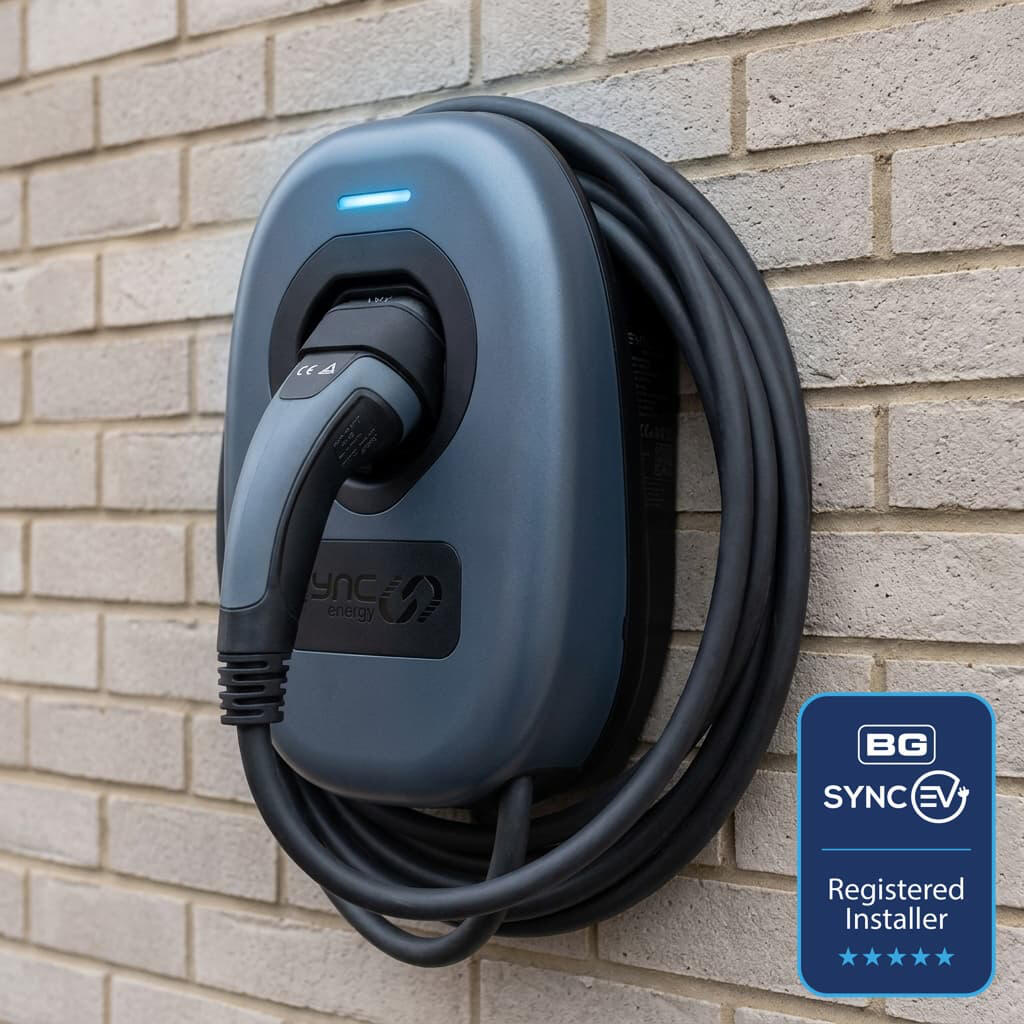
Sync Energy EV Charger

Sync Energy EV Charger


We're a Sync Energy Registered Installer3-year hardware warranty
✅ Smart 7.4kW home charger (22kW additional cost option)
Solar compatible charging
✅ Compatible with Type 2 EVs
✅ Integrated WiFi and ethernet (4G additional cost option)
✅ Charge on cheaper smart tariffs
✅ Sync Energy app
✅ Interchangeable coloured faceplates


☑️ Works with Intelligent Octopus Go
☑️ Works with EDF GoElectric Smart Charging
☑️ Works with British Gas Hive Power+
🚗 Compatible car required for Eon Next Drive Smart and OVO Charge Anytime
*Last checked: August 2026


From £879 installed*

7.5m Tethered - attached charging cable


From £849 installed*

Untethered (Socketed) - use your own cable

Ryan Electrical Northants Logo